Bat Fish, Rays, Cucuri & Wahoo (Ichthyology)
From Historia Naturalis
Matthäus Merian the Elder
Amsterdam, 1657
Issued in Historia Naturalis by Jon Jonston
Hand-colored copperplate engraving on folio leaf
Description
This richly detailed folio engraving depicts a diverse group of marine fish, including bat fish, rays, cucuri, wahoo, and related species, and was executed by Matthäus Merian the Elder for Jon Jonston’s Historia Naturalis, published in Amsterdam in 1657. The plate reflects the expanding European encounter with global marine life during the seventeenth century, incorporating species described through exploration, trade, and colonial contact.
The composition presents multiple fish species arranged for visual comparison, a hallmark of early modern ichthyology. Several of the species shown, including the longnose batfish and various rays, were unfamiliar to European audiences and often described using indigenous or transliterated names such as Guarapucu, Guacucuia, Cucuri, and Narinari. These names preserve traces of early encounters with New World and tropical marine environments and underscore the global scope of Jonston’s project.
Printed from a finely engraved copperplate, the image demonstrates Merian’s exceptional control of line, proportion, and spatial organization. The engraving was subsequently hand colored, likely in a contemporary workshop, enhancing differentiation between species while preserving the clarity of the underlying engraving. Each hand-colored example is unique, shaped by the individual colorist’s interpretation.
Matthäus Merian the Elder is best known for his monumental Topographia series of European city views, yet his natural history engravings are equally significant. Plates such as this one reveal Merian’s ability to translate unfamiliar and exotic subjects into clear, authoritative images, contributing to the early visual language of scientific observation.
This engraving stands as a compelling document of early modern marine science, combining exploration, taxonomy, and artistry at a moment when Europe was still learning to describe the world’s oceans.
Condition
Good overall condition for the age. Please view images closely for details.
Details
Medium: Hand-colored copperplate engraving
Format: Folio leaf
Date: 1657
Dimensions: 13.86 × 8.43 inches (35.2 × 21.4 cm)
Subjects: Bat Fish, Rays, Cucuri, Wahoo, Ichthyology
Status: Available
Bat Fish, Rays, Cucuri & Wahoo (Ichthyology)
From Historia Naturalis
Matthäus Merian the Elder
Amsterdam, 1657
Issued in Historia Naturalis by Jon Jonston
Hand-colored copperplate engraving on folio leaf
Description
This richly detailed folio engraving depicts a diverse group of marine fish, including bat fish, rays, cucuri, wahoo, and related species, and was executed by Matthäus Merian the Elder for Jon Jonston’s Historia Naturalis, published in Amsterdam in 1657. The plate reflects the expanding European encounter with global marine life during the seventeenth century, incorporating species described through exploration, trade, and colonial contact.
The composition presents multiple fish species arranged for visual comparison, a hallmark of early modern ichthyology. Several of the species shown, including the longnose batfish and various rays, were unfamiliar to European audiences and often described using indigenous or transliterated names such as Guarapucu, Guacucuia, Cucuri, and Narinari. These names preserve traces of early encounters with New World and tropical marine environments and underscore the global scope of Jonston’s project.
Printed from a finely engraved copperplate, the image demonstrates Merian’s exceptional control of line, proportion, and spatial organization. The engraving was subsequently hand colored, likely in a contemporary workshop, enhancing differentiation between species while preserving the clarity of the underlying engraving. Each hand-colored example is unique, shaped by the individual colorist’s interpretation.
Matthäus Merian the Elder is best known for his monumental Topographia series of European city views, yet his natural history engravings are equally significant. Plates such as this one reveal Merian’s ability to translate unfamiliar and exotic subjects into clear, authoritative images, contributing to the early visual language of scientific observation.
This engraving stands as a compelling document of early modern marine science, combining exploration, taxonomy, and artistry at a moment when Europe was still learning to describe the world’s oceans.
Condition
Good overall condition for the age. Please view images closely for details.
Details
Medium: Hand-colored copperplate engraving
Format: Folio leaf
Date: 1657
Dimensions: 13.86 × 8.43 inches (35.2 × 21.4 cm)
Subjects: Bat Fish, Rays, Cucuri, Wahoo, Ichthyology
Status: Available
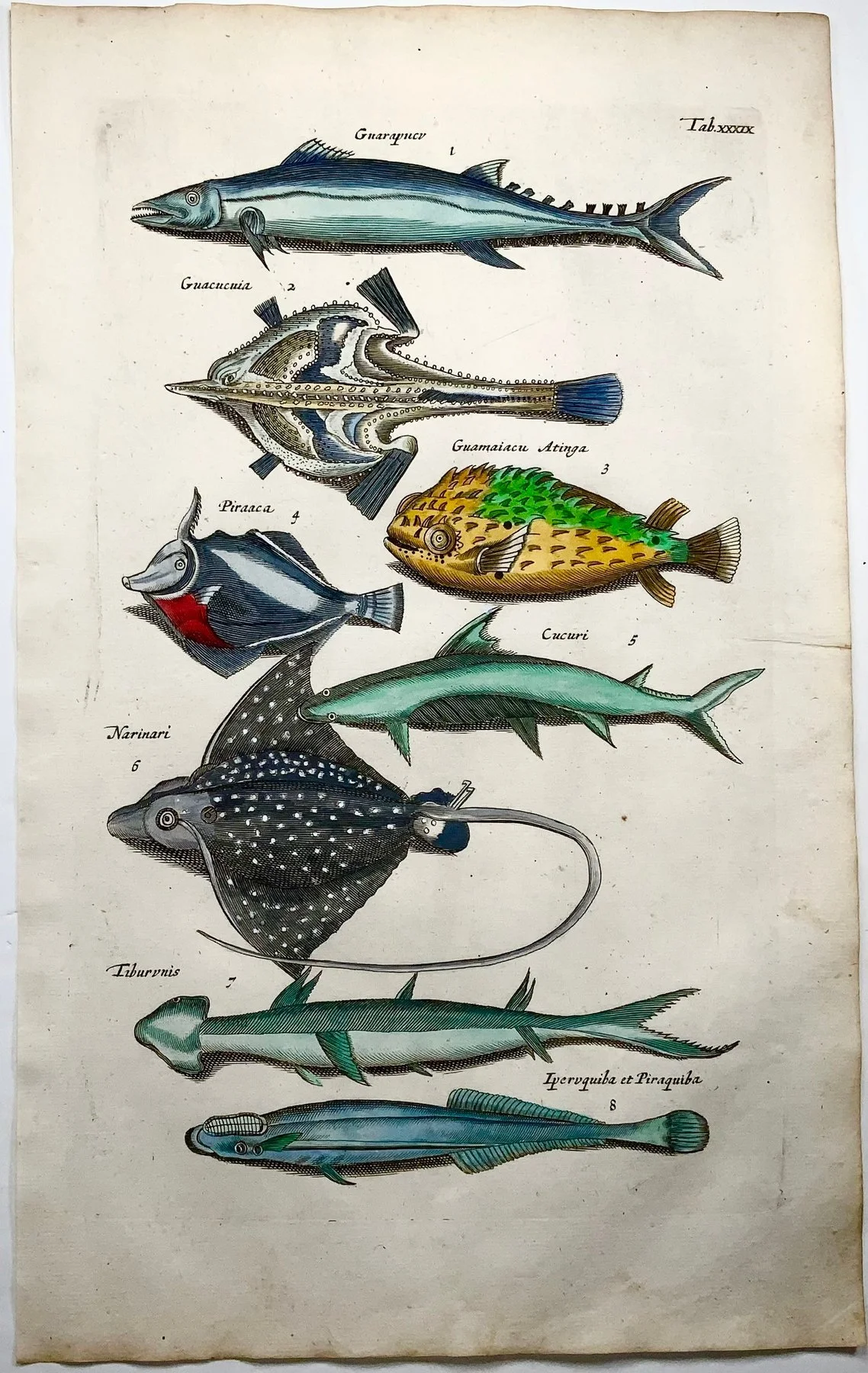 Image 1 of 6
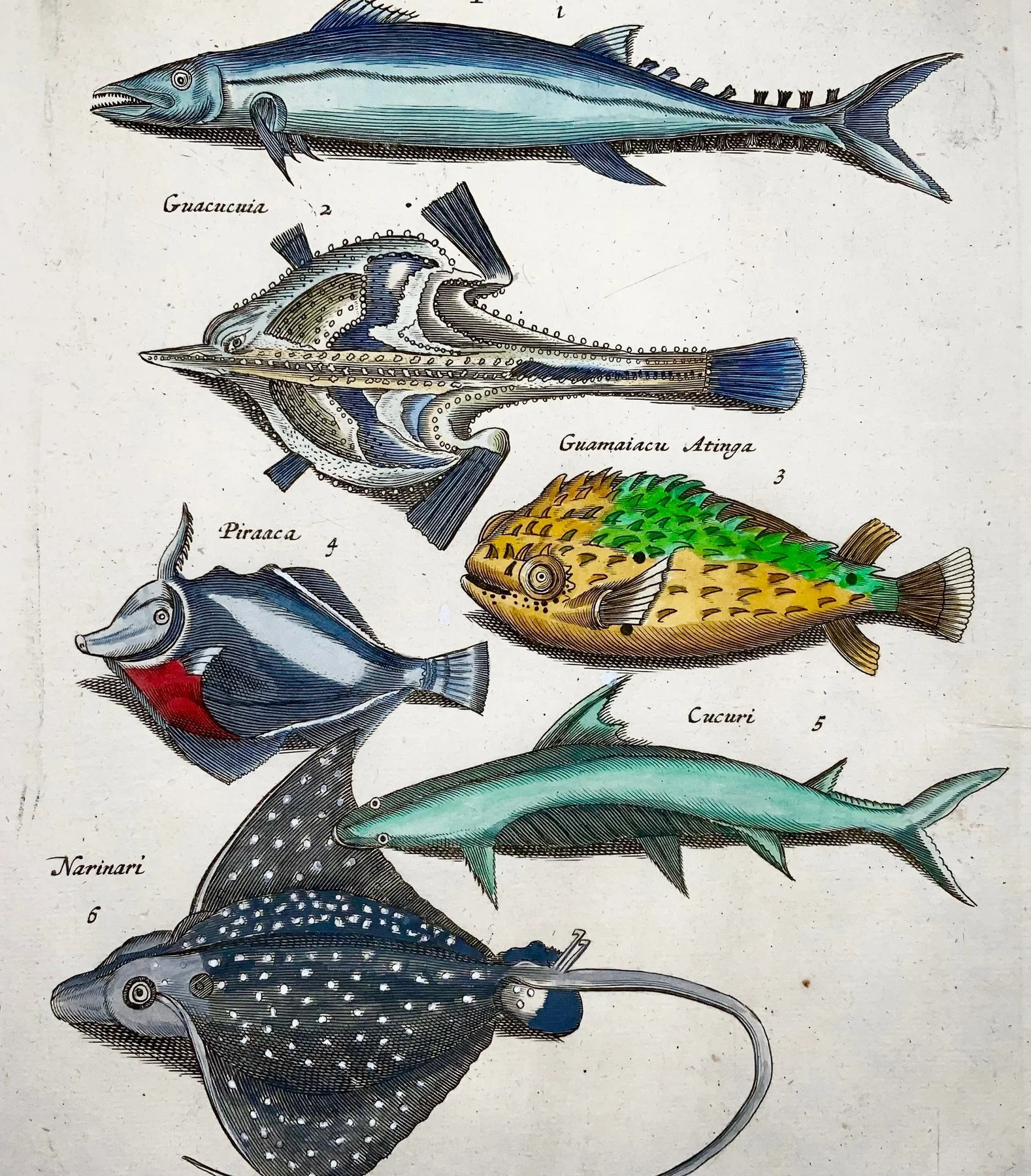 Image 2 of 6
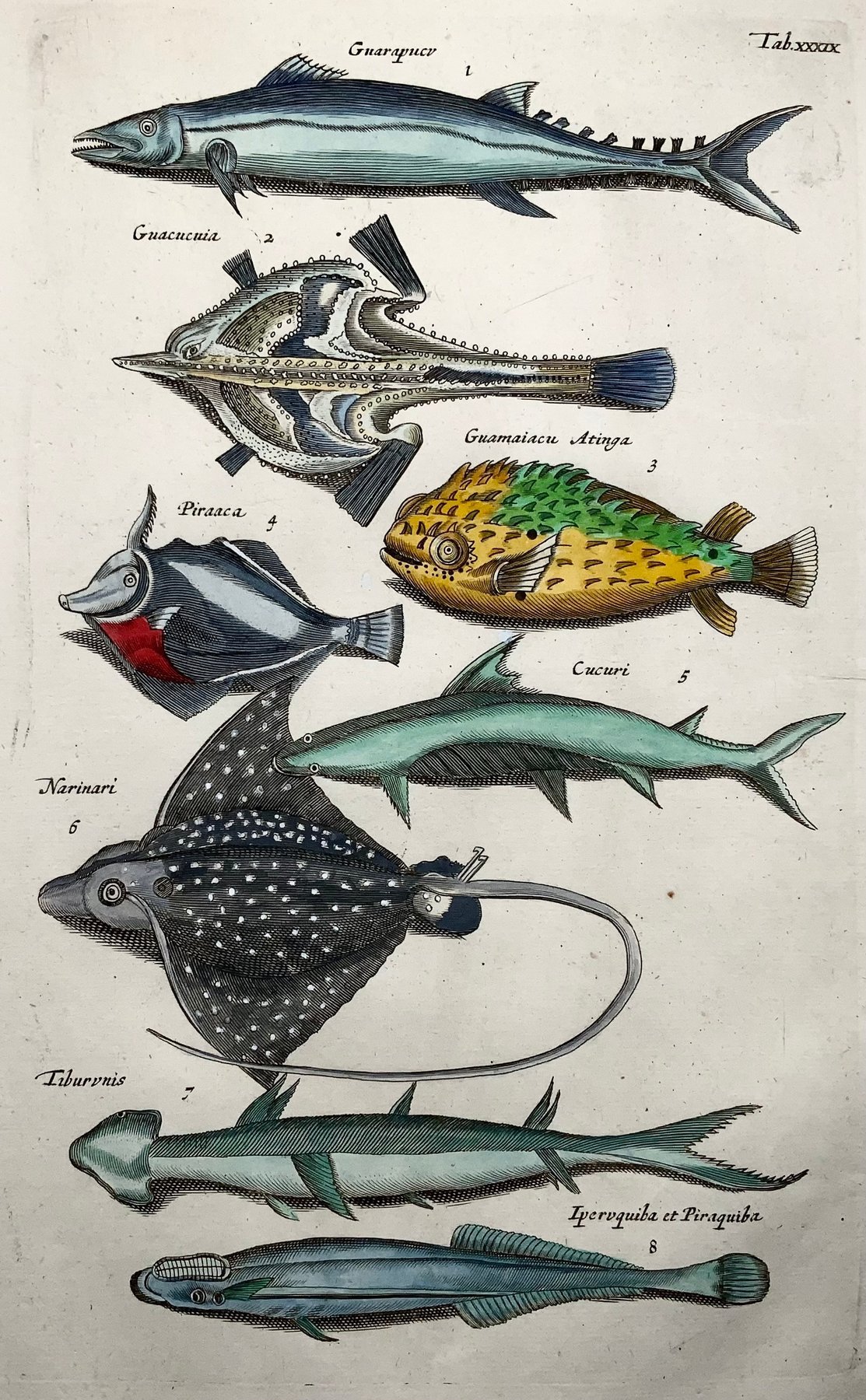 Image 3 of 6
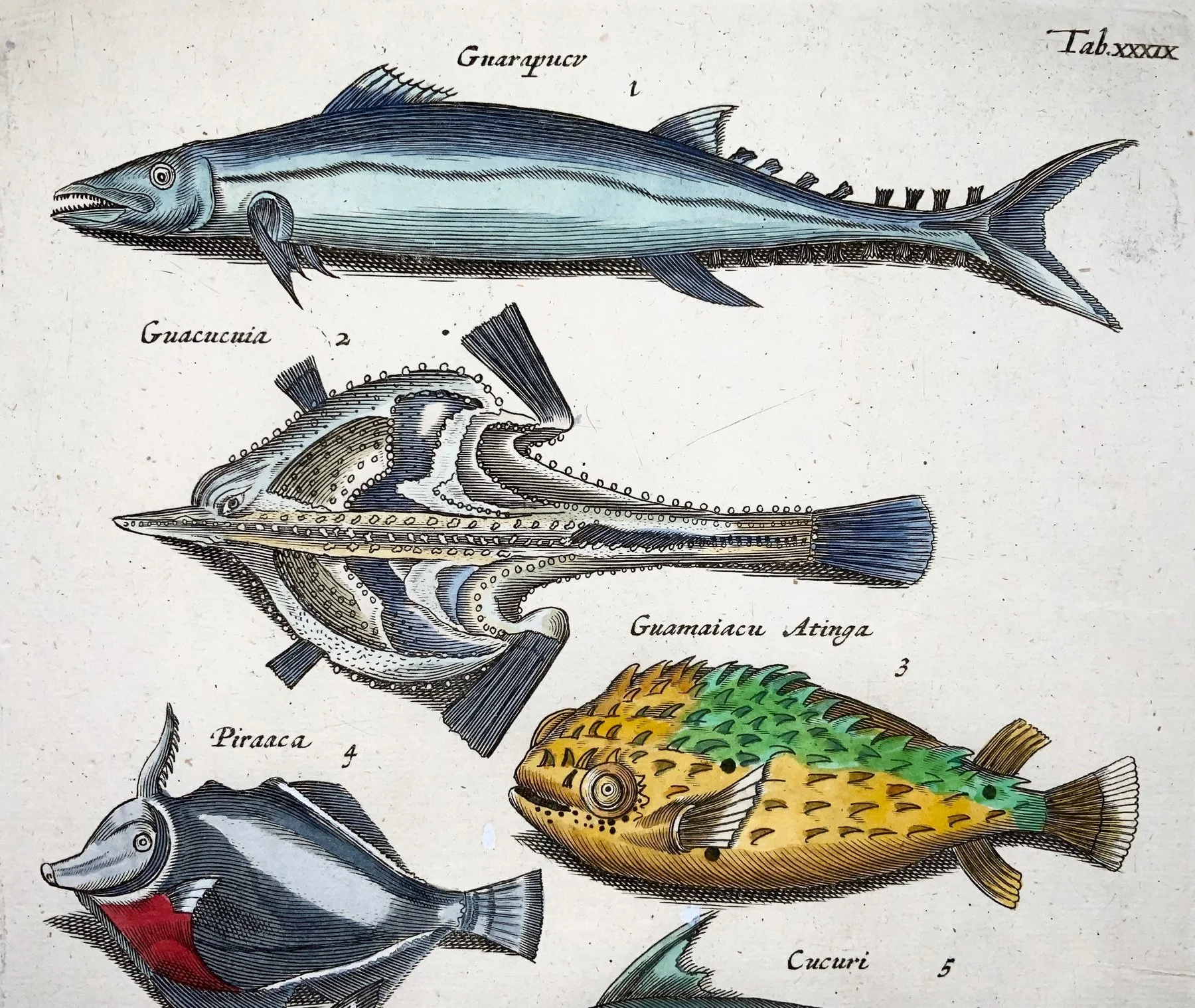 Image 4 of 6
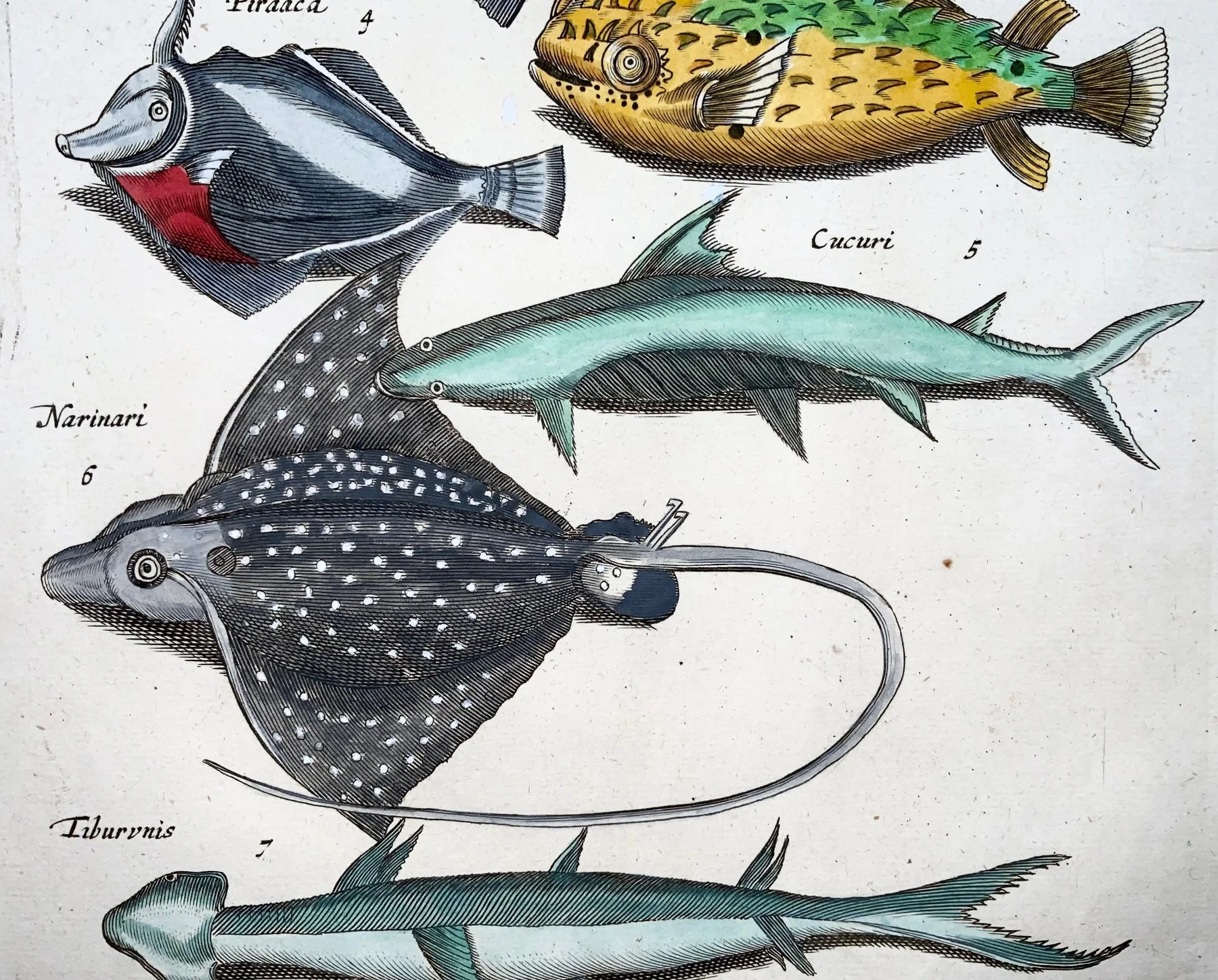 Image 5 of 6
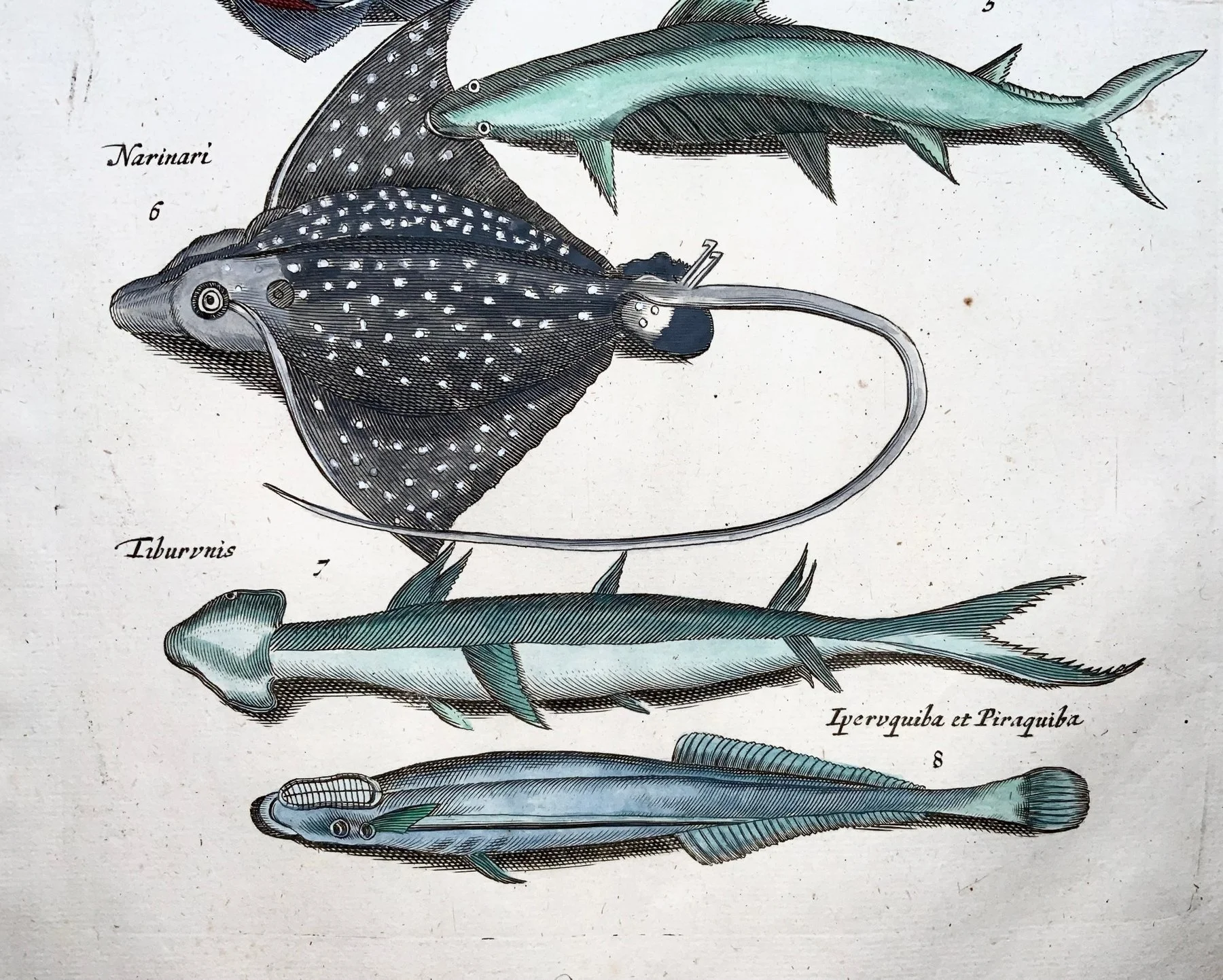 Image 6 of 6