 Image 1 of 5
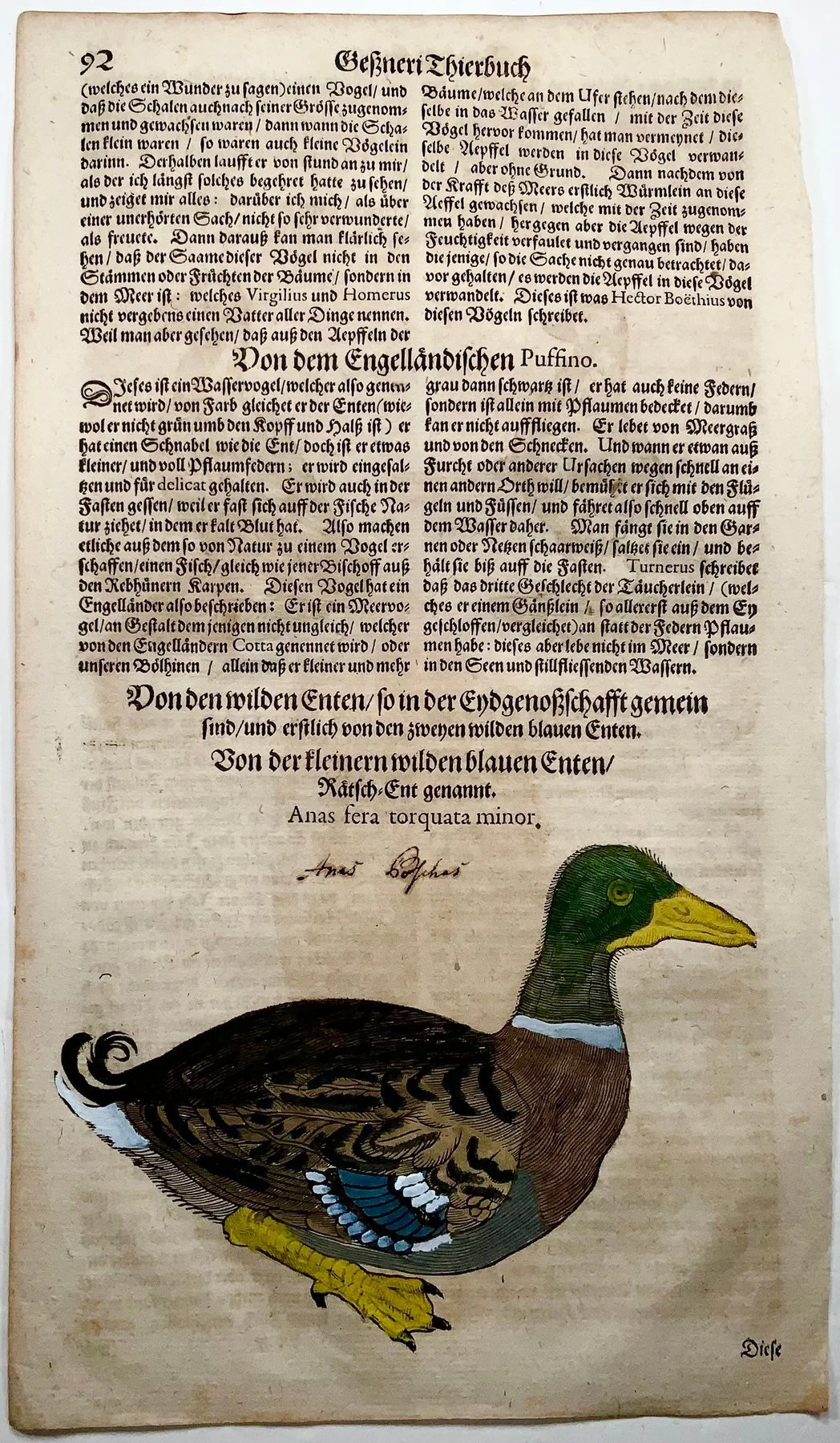 Image 2 of 5
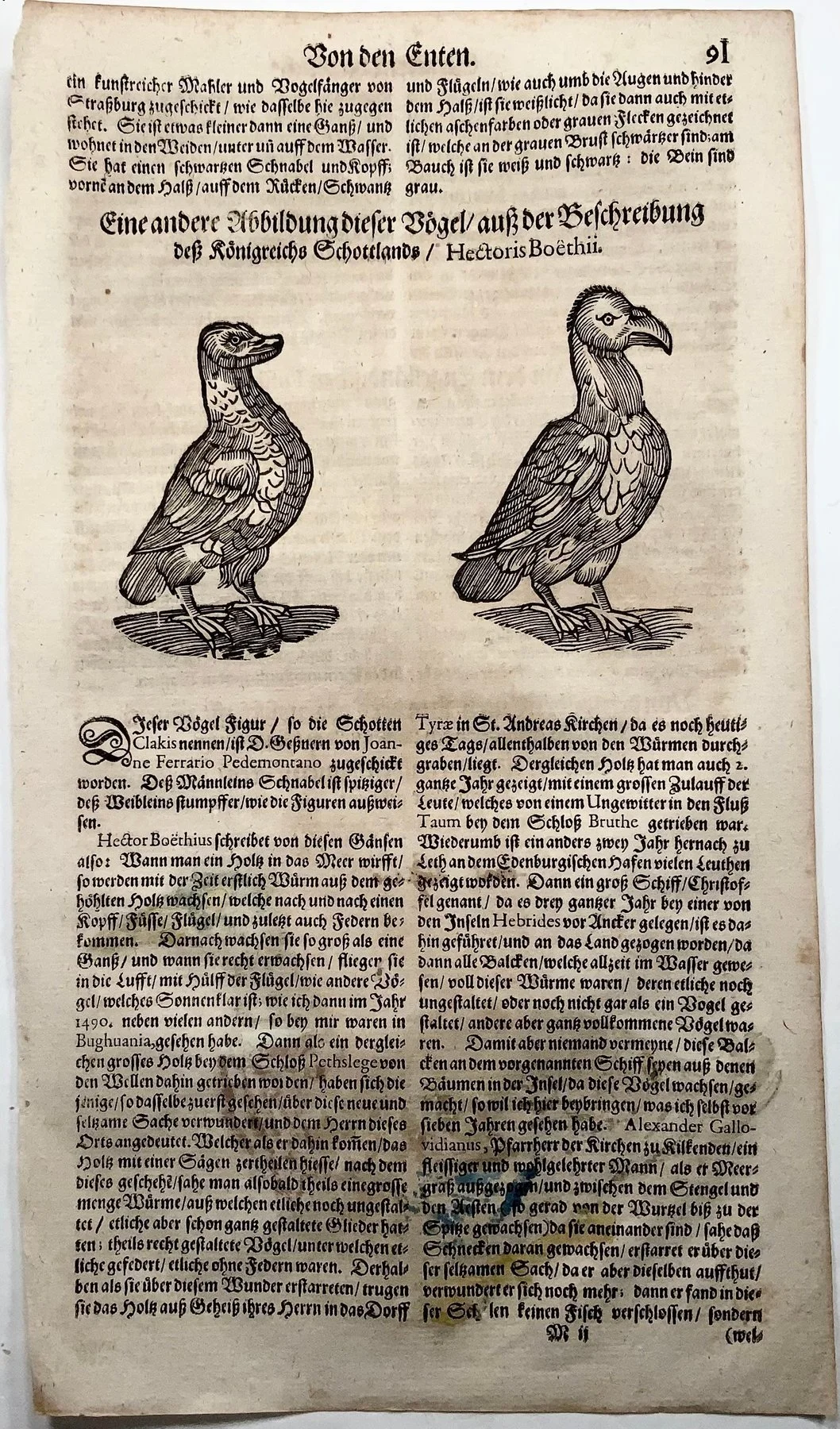 Image 3 of 5
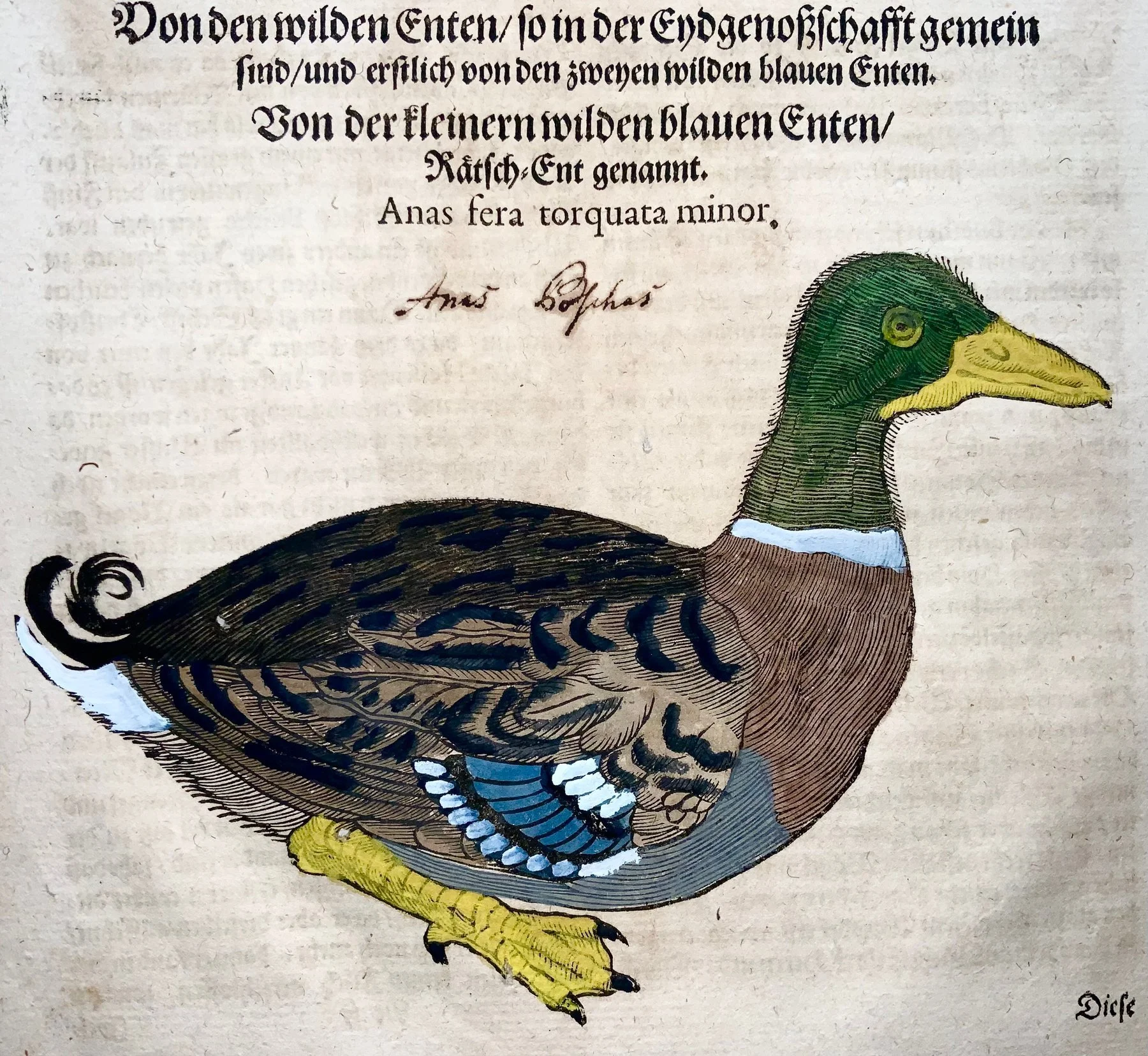 Image 4 of 5
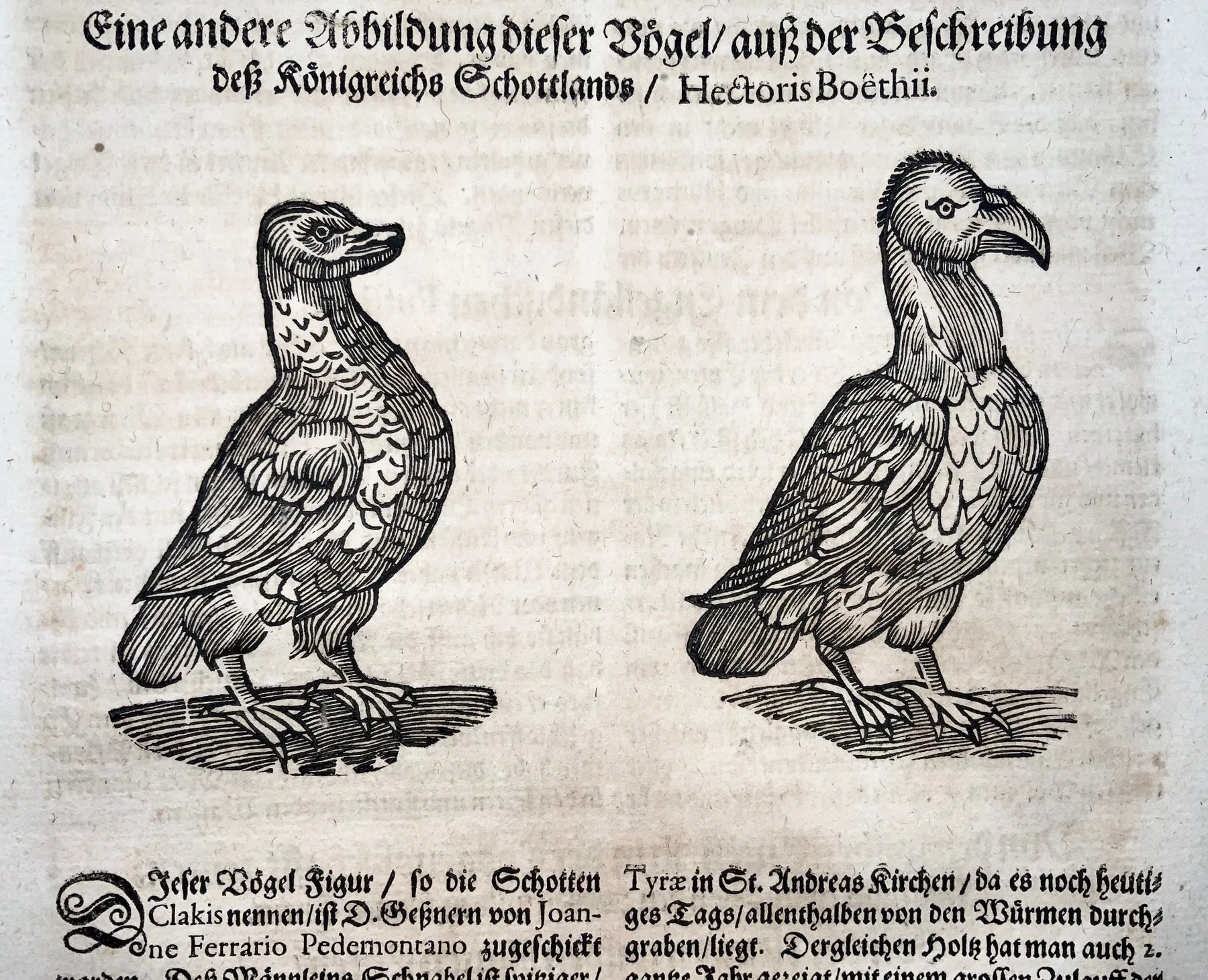 Image 5 of 5
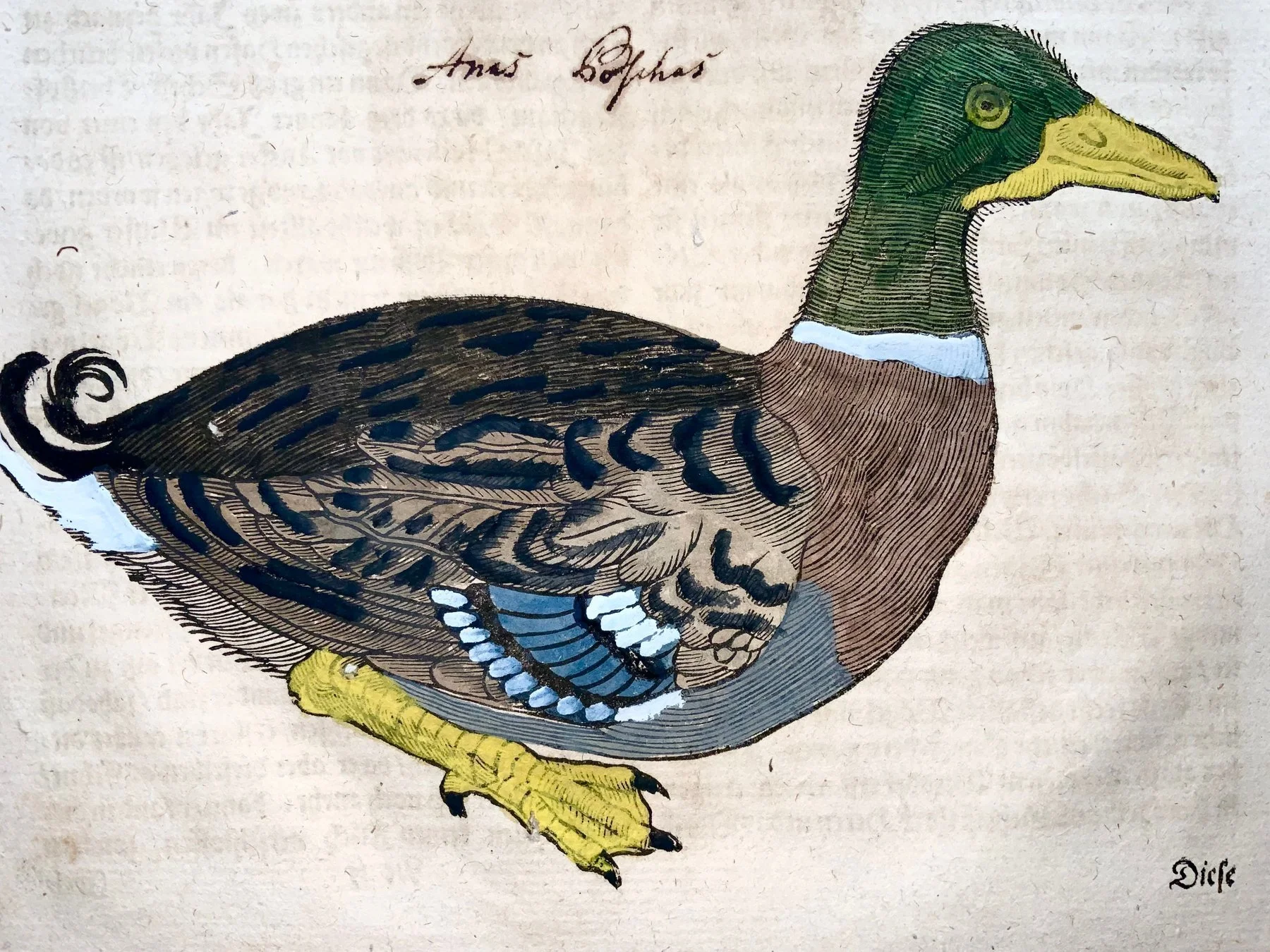
The recto is page 92 of the Geßneri Thierbuch, headed Von den wilden Enten — on wild ducks — with the mallard identified as Anas fera torquata minor / Anas Bosphas / Rätsch-Ent. The verso pages 91 carries the barnacle geese section with two uncoloured woodcuts from Hector Boethius's description of Scotland. The mallard coloring is rich and naturalistic — deep bottle green head, yellow bill, blue speculum, warm brown body, yellow feet — with a delightful curled tail feather.
Conrad Gesner (1516–1565) — Mallard Duck, Anas Fera Torquata Minor — folio with hand coloured woodcut — 1669
$[price]
Mallard Duck (Anas Fera Torquata Minor)
From Allgemeines Thier-Buch (Historiae Animalium)
Conrad Gesner Zurich, 1669
Hand-coloured woodcut on folio leaf Woodcut printed to recto, text and uncoloured woodcuts to verso
This folio leaf from Conrad Gesner's Allgemeines Thier-Buch — the German vernacular edition of his monumental Historiae Animalium — presents a splendidly hand-coloured woodcut of the mallard drake, identified in the text as Anas fera torquata minor, the lesser wild blue duck, known in Swiss German as the Rätsch-Ent. The section heading above the image opens the chapter on wild ducks common throughout the Swiss Confederation, situating this familiar bird within the broader ornithological survey that made Gesner's work the foundational text of modern zoology.
Gesner's Historiae Animalium, first published in Zurich between 1551 and 1558, was the most comprehensive attempt to describe the animal kingdom since antiquity — an encyclopaedic synthesis of classical learning, contemporary observation, and firsthand natural history that ran to thousands of pages and became a defining reference work for European naturalists for over a century. The Allgemeines Thier-Buch, its German edition, brought this scholarship to a wider readership in accessible vernacular form. Gesner himself described the mallard with characteristic thoroughness, noting its coloring, habitat, habits, and regional names across multiple languages.
The woodcut depicts a drake in full lateral profile — bottle-green iridescent head, yellow bill, crisp white collar, warm chestnut breast, mottled brown body plumage, blue speculum with white edging at the wing, yellow webbed feet, and the characteristic curled black tail feathers of the breeding male. It is a confident, well-proportioned image that captures the essential character of the bird with an economy of means that the woodcut medium handles particularly well.
The sheet has been hand coloured at a later date, with green, blue, brown, ochre, and white applied with close attention to the natural markings of the species. The coloring follows the woodcut lines faithfully and is well-preserved across the sheet.
The verso carries page 91, with two uncoloured woodcuts of Scottish barnacle geese drawn from Hector Boethius's Description of Scotland — a reminder that Gesner drew on sources from across Europe to assemble his survey, including correspondents who sent him descriptions and images of birds he had never personally observed.
Even age toning throughout. Some colour show-through to verso. Numerous pin holes, three of which fall within the image. Please view all images carefully.
Medium: Hand-coloured woodcut (later colour)
Format: Folio leaf, text and woodcuts to verso
Date: 1669
Dimensions: Please confirm — approximately 8.3 × 13.4 inches (21 × 34 cm)
Status: Available
The recto is page 92 of the Geßneri Thierbuch, headed Von den wilden Enten — on wild ducks — with the mallard identified as Anas fera torquata minor / Anas Bosphas / Rätsch-Ent. The verso pages 91 carries the barnacle geese section with two uncoloured woodcuts from Hector Boethius's description of Scotland. The mallard coloring is rich and naturalistic — deep bottle green head, yellow bill, blue speculum, warm brown body, yellow feet — with a delightful curled tail feather.
Conrad Gesner (1516–1565) — Mallard Duck, Anas Fera Torquata Minor — folio with hand coloured woodcut — 1669
$[price]
Mallard Duck (Anas Fera Torquata Minor)
From Allgemeines Thier-Buch (Historiae Animalium)
Conrad Gesner Zurich, 1669
Hand-coloured woodcut on folio leaf Woodcut printed to recto, text and uncoloured woodcuts to verso
This folio leaf from Conrad Gesner's Allgemeines Thier-Buch — the German vernacular edition of his monumental Historiae Animalium — presents a splendidly hand-coloured woodcut of the mallard drake, identified in the text as Anas fera torquata minor, the lesser wild blue duck, known in Swiss German as the Rätsch-Ent. The section heading above the image opens the chapter on wild ducks common throughout the Swiss Confederation, situating this familiar bird within the broader ornithological survey that made Gesner's work the foundational text of modern zoology.
Gesner's Historiae Animalium, first published in Zurich between 1551 and 1558, was the most comprehensive attempt to describe the animal kingdom since antiquity — an encyclopaedic synthesis of classical learning, contemporary observation, and firsthand natural history that ran to thousands of pages and became a defining reference work for European naturalists for over a century. The Allgemeines Thier-Buch, its German edition, brought this scholarship to a wider readership in accessible vernacular form. Gesner himself described the mallard with characteristic thoroughness, noting its coloring, habitat, habits, and regional names across multiple languages.
The woodcut depicts a drake in full lateral profile — bottle-green iridescent head, yellow bill, crisp white collar, warm chestnut breast, mottled brown body plumage, blue speculum with white edging at the wing, yellow webbed feet, and the characteristic curled black tail feathers of the breeding male. It is a confident, well-proportioned image that captures the essential character of the bird with an economy of means that the woodcut medium handles particularly well.
The sheet has been hand coloured at a later date, with green, blue, brown, ochre, and white applied with close attention to the natural markings of the species. The coloring follows the woodcut lines faithfully and is well-preserved across the sheet.
The verso carries page 91, with two uncoloured woodcuts of Scottish barnacle geese drawn from Hector Boethius's Description of Scotland — a reminder that Gesner drew on sources from across Europe to assemble his survey, including correspondents who sent him descriptions and images of birds he had never personally observed.
Even age toning throughout. Some colour show-through to verso. Numerous pin holes, three of which fall within the image. Please view all images carefully.
Medium: Hand-coloured woodcut (later colour)
Format: Folio leaf, text and woodcuts to verso
Date: 1669
Dimensions: Please confirm — approximately 8.3 × 13.4 inches (21 × 34 cm)
Status: Available