Folio copperplate engraving by Matthäus Merian, issued in Jan Jonston's Historiae Naturalis de Avibus (Amsterdam, 1657). Tab. 55, titled Auis Paradisia S. Manucodiata. Paradeis Vogel. Hand colour throughout, applied with exceptional care across all five birds.
The plate depicts five species of Birds of Paradise, each identified in contemporary script: an unnamed species at top with blazing red-orange tail plumes and a deep blue crown; Manucodiata Aldr. with iridescent teal-green head, golden-yellow breast and long flowing golden plumes; Manucodiata Z Aldr. with wings spread wide in shimmering blue and green, and dramatic crimson tail feathers trailing below; Manucodiata longa in warm golden-ochre with a long twisted rope-like tail cord; Paradisea auis Maioris generis Clus (Greater Bird of Paradise) with cobalt blue head and long rust-coloured flank plumes; and Rex auium Paradysearum Clus (King of the Birds of Paradise) — the smallest and most fantastical, with vivid red head, yellow-green mantle, white-spotted breast, and the species' distinctive wire-like coiled tail ornaments. All five birds were known to European naturalists only from trade skins, with legs removed — giving rise to the widespread Renaissance belief that Birds of Paradise never landed and lived their entire lives in flight.
Matthäus Merian the Elder (1593–1650), born in Basel and trained in Zürich, Strasbourg, Nancy, and Paris, became one of the most celebrated engravers and publishers of the 17th century, working primarily in Frankfurt. His plates for Jonston's Historia Naturalis represent the high-water mark of natural history illustration before the era of fully scientific taxonomy.
Condition: Good overall for age. A few surface marks. Hand colour fresh and vivid.
Folio dimensions: 35.2 × 21.9 cm (13.9 × 8.6 inches).
Folio copperplate engraving by Matthäus Merian, issued in Jan Jonston's Historiae Naturalis de Avibus (Amsterdam, 1657). Tab. 55, titled Auis Paradisia S. Manucodiata. Paradeis Vogel. Hand colour throughout, applied with exceptional care across all five birds.
The plate depicts five species of Birds of Paradise, each identified in contemporary script: an unnamed species at top with blazing red-orange tail plumes and a deep blue crown; Manucodiata Aldr. with iridescent teal-green head, golden-yellow breast and long flowing golden plumes; Manucodiata Z Aldr. with wings spread wide in shimmering blue and green, and dramatic crimson tail feathers trailing below; Manucodiata longa in warm golden-ochre with a long twisted rope-like tail cord; Paradisea auis Maioris generis Clus (Greater Bird of Paradise) with cobalt blue head and long rust-coloured flank plumes; and Rex auium Paradysearum Clus (King of the Birds of Paradise) — the smallest and most fantastical, with vivid red head, yellow-green mantle, white-spotted breast, and the species' distinctive wire-like coiled tail ornaments. All five birds were known to European naturalists only from trade skins, with legs removed — giving rise to the widespread Renaissance belief that Birds of Paradise never landed and lived their entire lives in flight.
Matthäus Merian the Elder (1593–1650), born in Basel and trained in Zürich, Strasbourg, Nancy, and Paris, became one of the most celebrated engravers and publishers of the 17th century, working primarily in Frankfurt. His plates for Jonston's Historia Naturalis represent the high-water mark of natural history illustration before the era of fully scientific taxonomy.
Condition: Good overall for age. A few surface marks. Hand colour fresh and vivid.
Folio dimensions: 35.2 × 21.9 cm (13.9 × 8.6 inches).
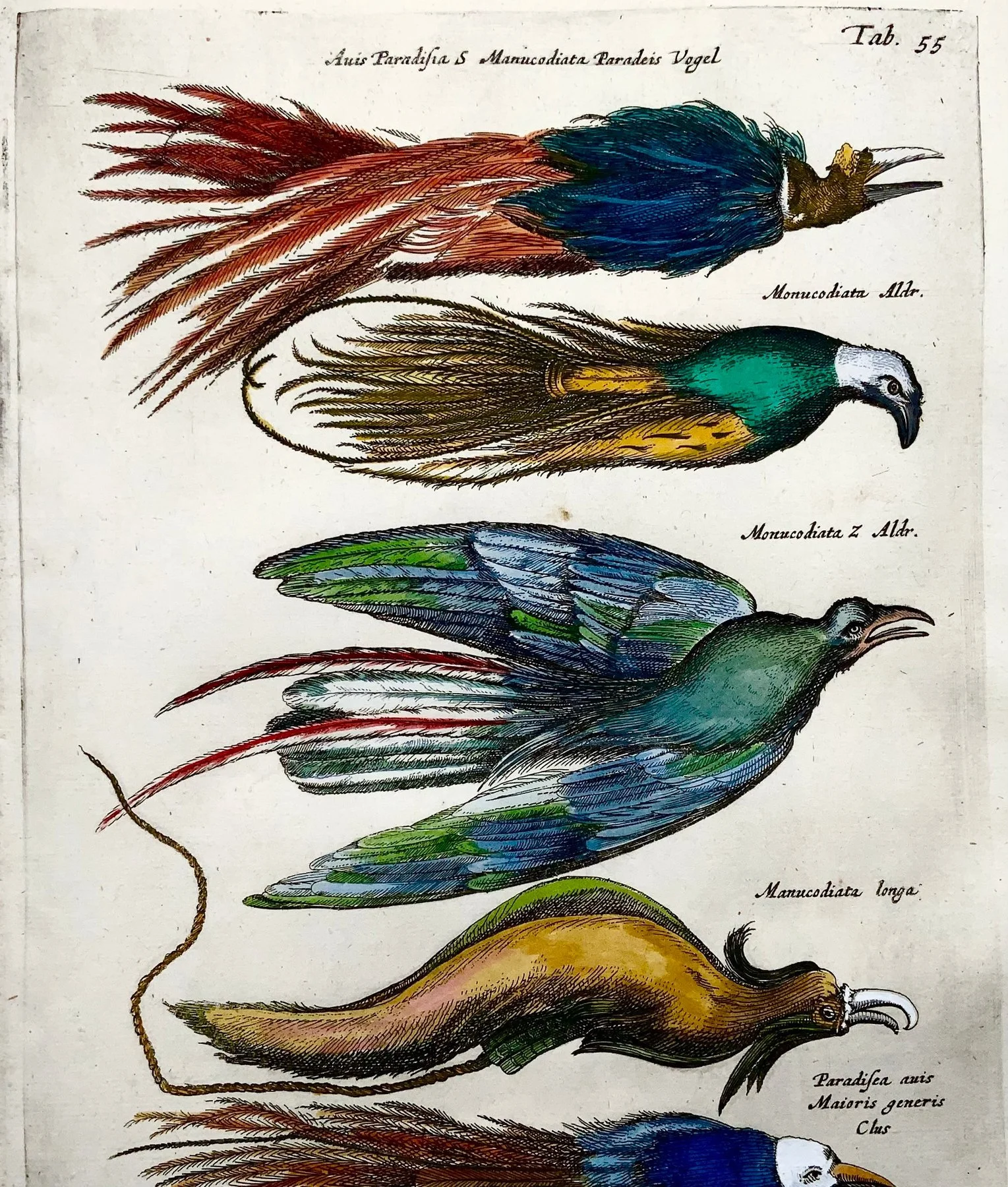 Image 1 of 6
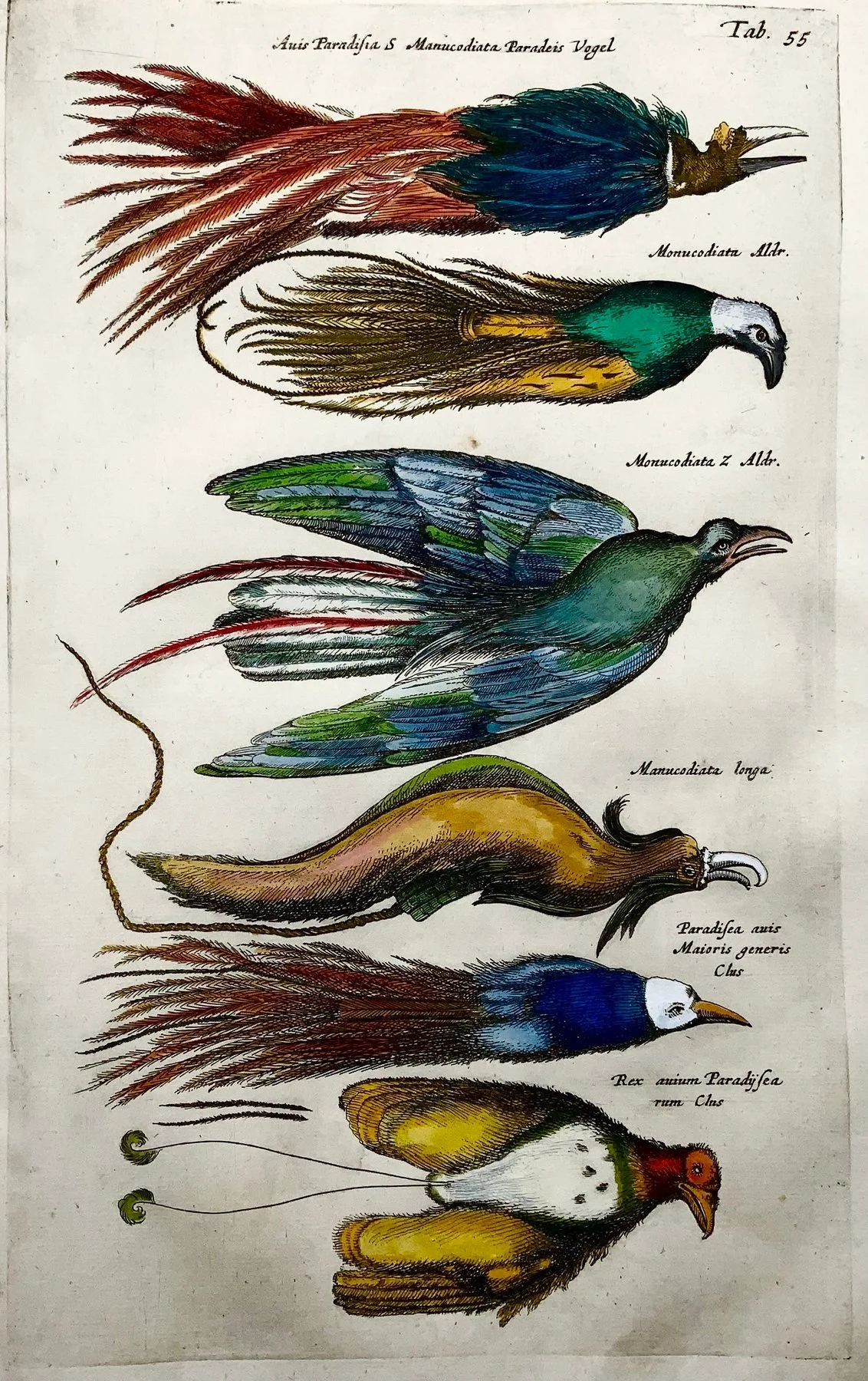 Image 2 of 6
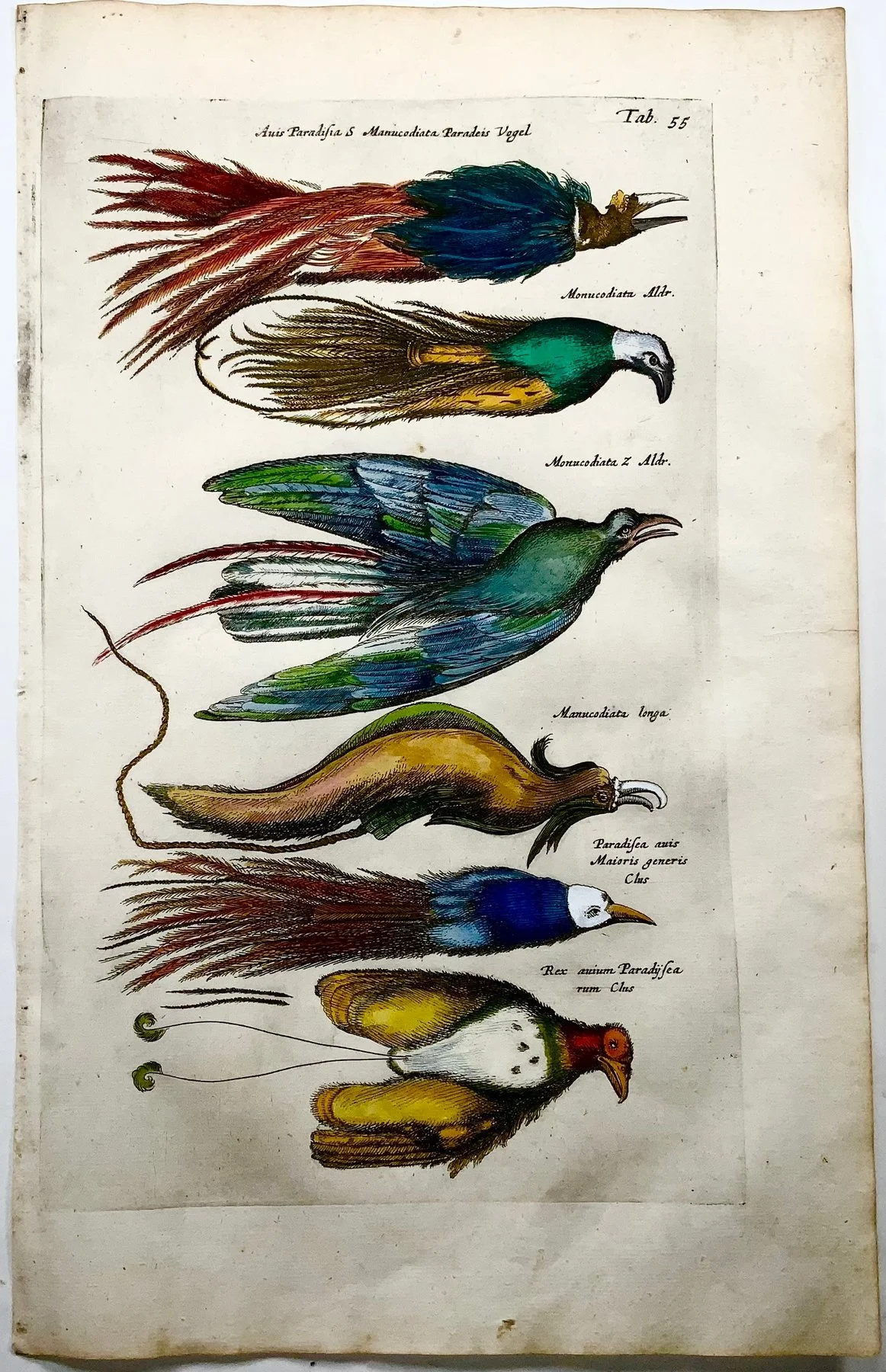 Image 3 of 6
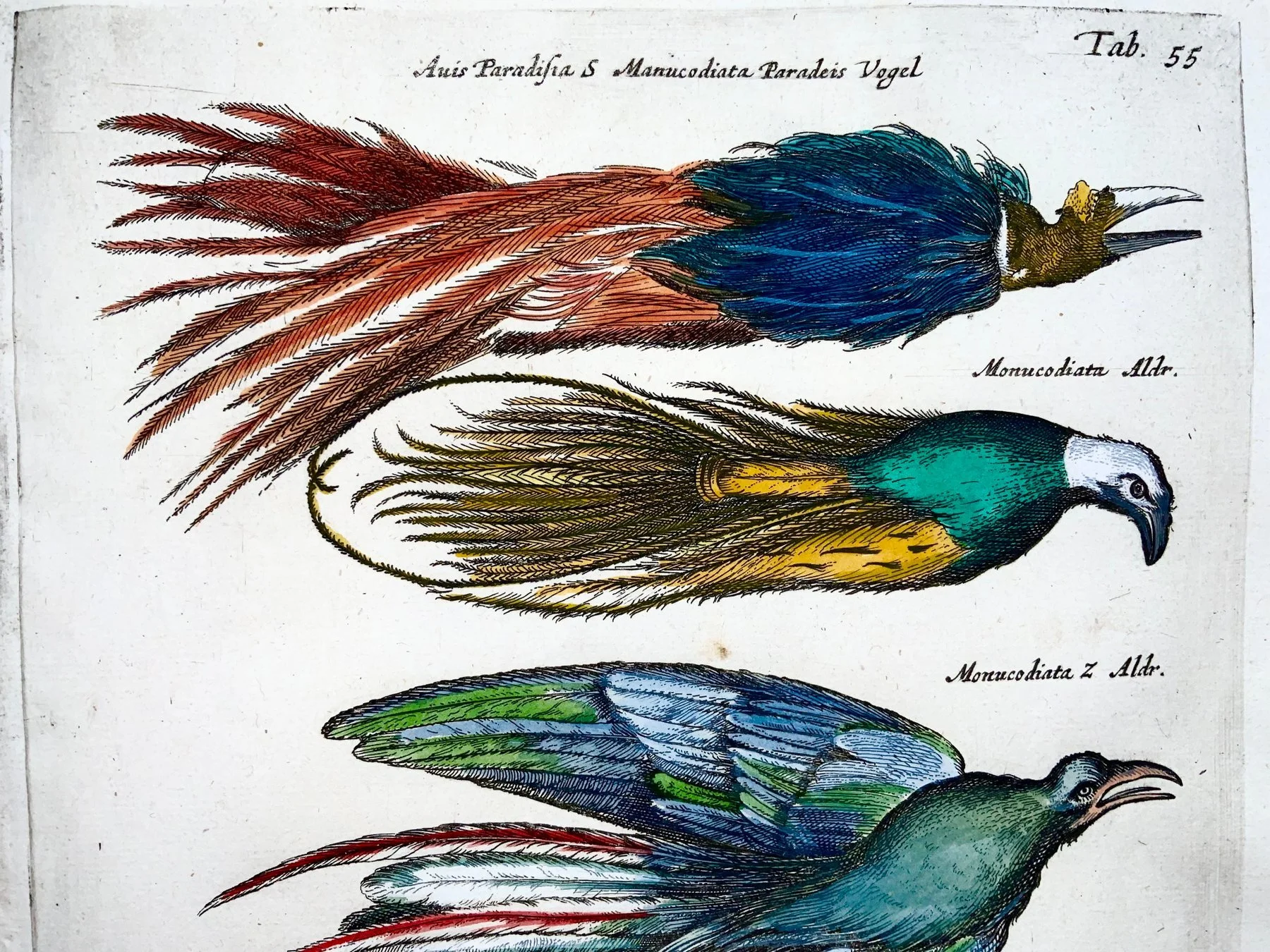 Image 4 of 6
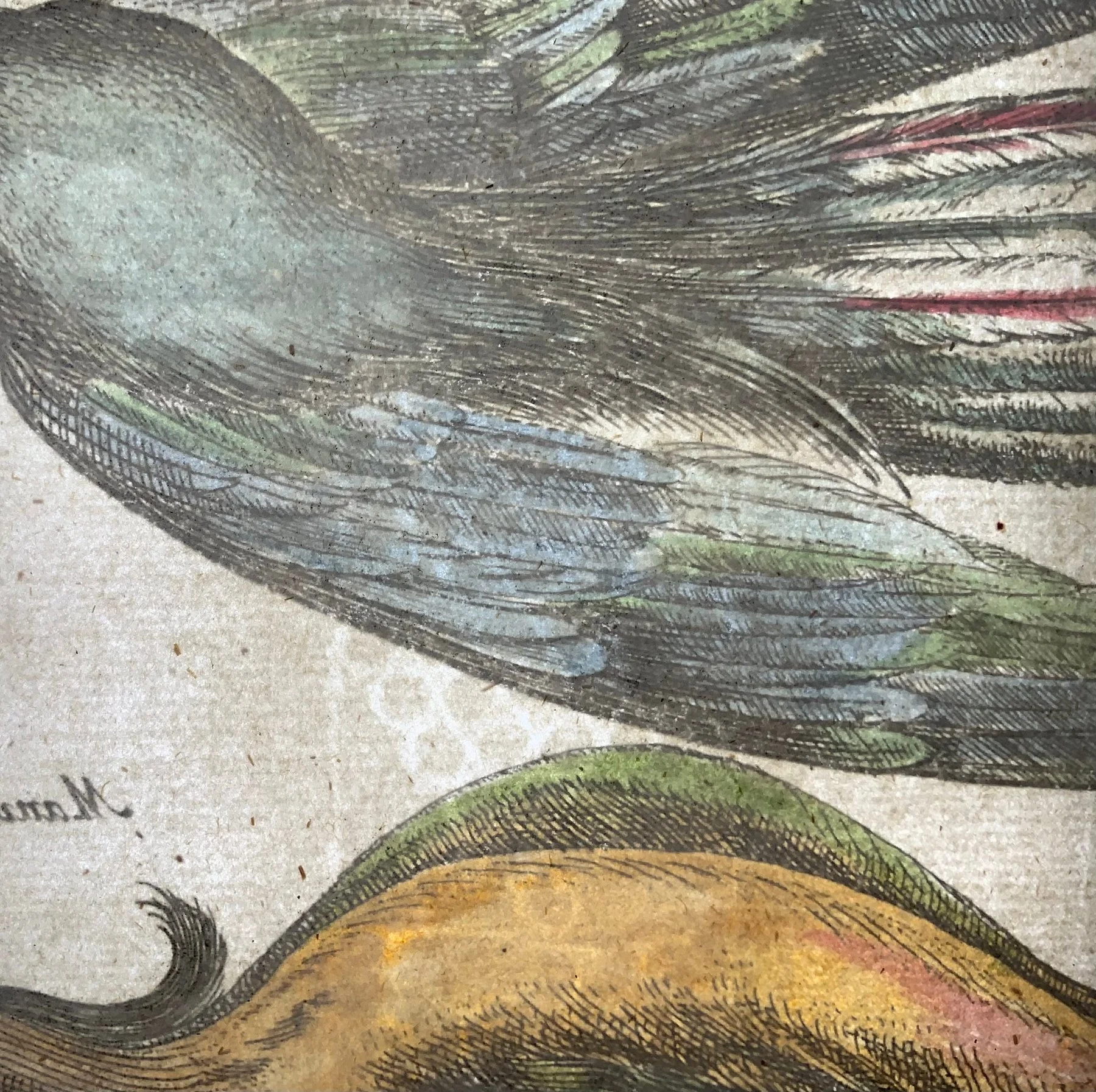 Image 5 of 6