 Image 1 of 4
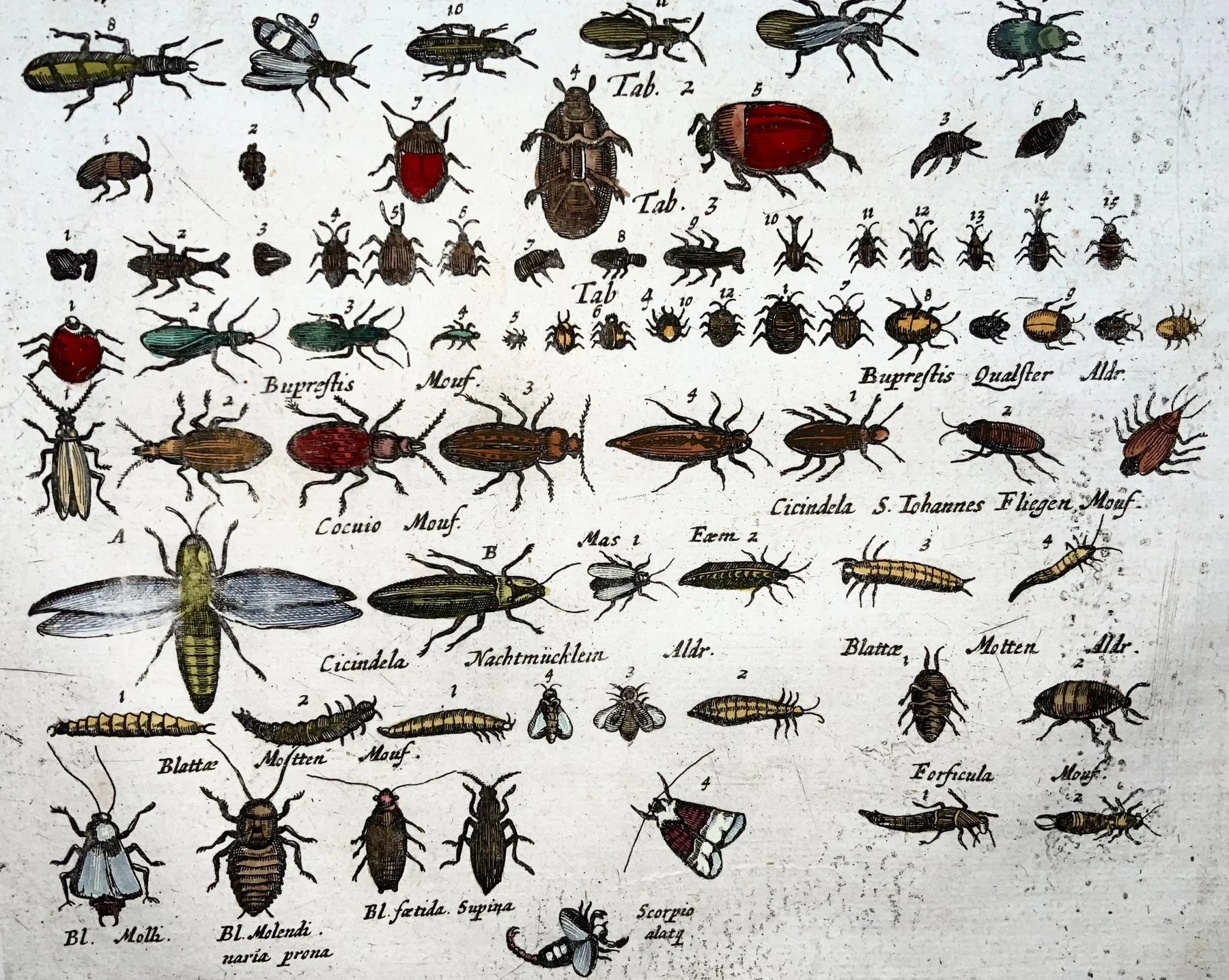 Image 2 of 4
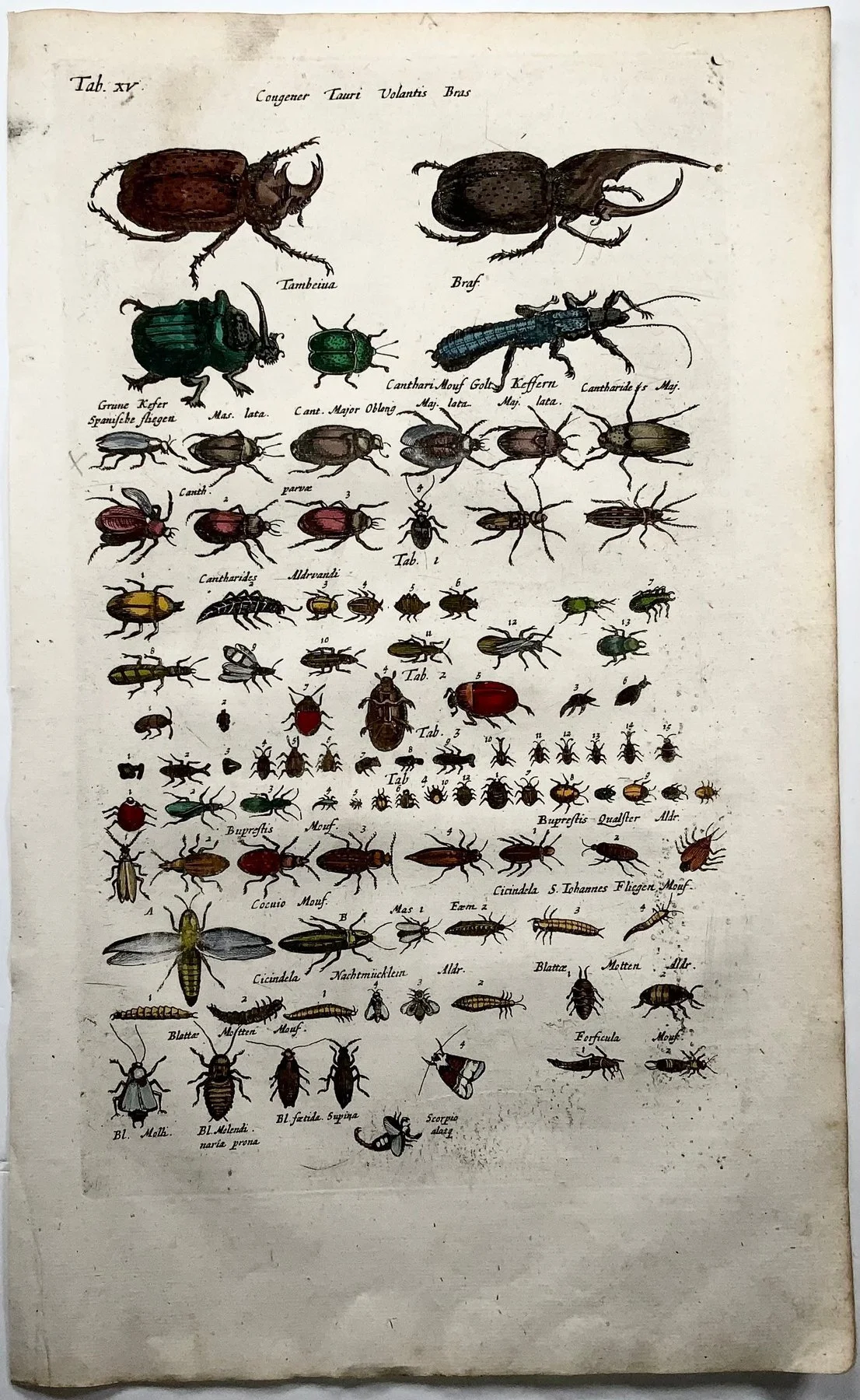 Image 3 of 4
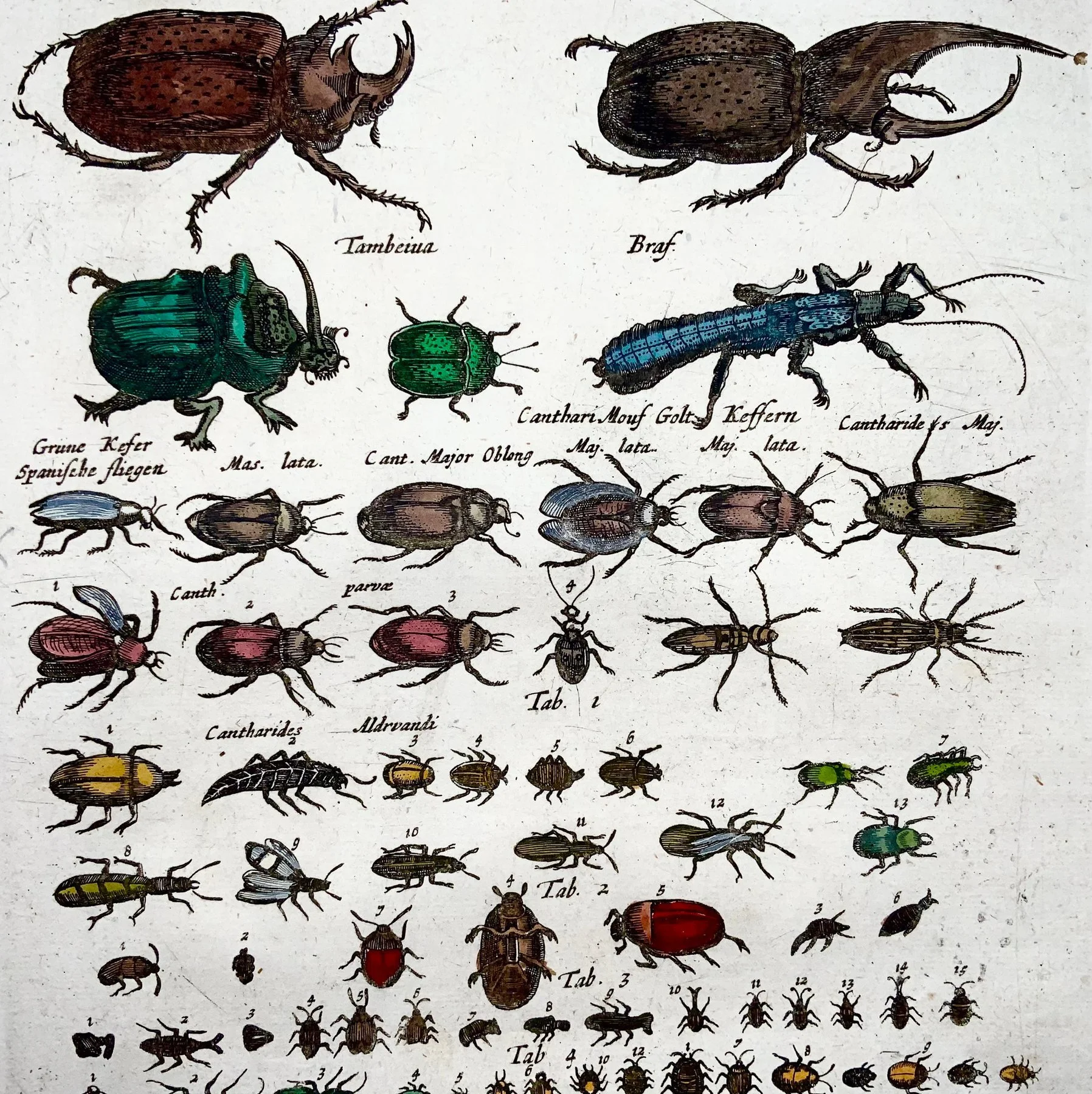 Image 4 of 4
From Historia Naturalis
Matthäus Merian the Elder
Amsterdam, 1657
Issued in Historia Naturalis by Jon Jonston
Hand-colored copperplate engraving on folio leaf
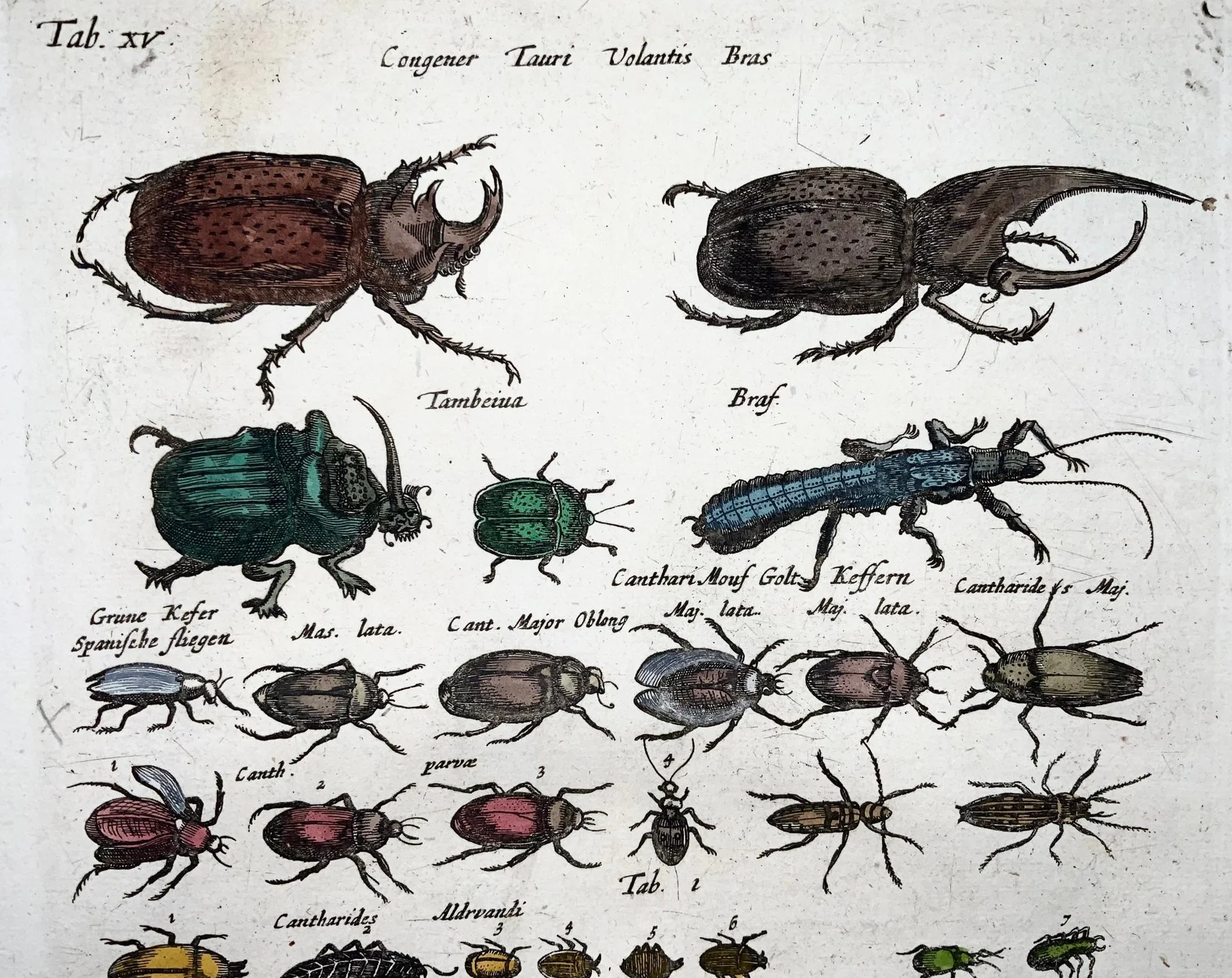
This finely detailed folio engraving depicting scarab beetles, bugs, and assorted insects was executed by Matthäus Merian the Elder and published in Amsterdam in 1657 as part of Jon Jonston’s Historia Naturalis. The plate stands as an early and compelling document in the visual history of entomology, produced at a moment when insects were only beginning to be studied systematically.
The composition assembles multiple insect species on a single sheet, encouraging comparison of body structure, segmentation, and wing form. Scarab beetles in particular fascinated early modern naturalists due to their durability, metamorphosis, and symbolic associations inherited from antiquity. Merian’s engraving treats these creatures not as allegory, but as physical organisms to be observed and recorded.
Printed from a precisely cut copperplate, the engraving demonstrates Merian’s exceptional control of line and proportion. The sheet was subsequently hand colored, likely in a contemporary workshop, enhancing contrast and legibility while preserving the crispness of the engraving. As with all hand-colored examples, each impression is unique, shaped by the individual colorist’s choices.
Matthäus Merian the Elder was among the most accomplished engravers of the seventeenth century, best known for his Topographia series of European city views. His natural history plates, however, are equally significant, translating unfamiliar and often overlooked subjects into authoritative images that helped shape early scientific understanding.
This engraving offers a rare glimpse into how insects were first organized visually within Renaissance science, making it an important artifact for collectors and institutions interested in the origins of zoology and scientific illustration.
Good overall condition for the age. Some fingering to the margins consistent with historical handling. Please view images closely for details.
Medium: Hand-colored copperplate engraving
Format: Folio leaf
Date: 1657
Dimensions: 13.86 × 8.43 inches (35.2 × 21.4 cm)
Subjects: Scarab Beetles, Bugs, Insects, Entomology
Status: Available
From Historia Naturalis
Matthäus Merian the Elder
Amsterdam, 1657
Issued in Historia Naturalis by Jon Jonston
Hand-colored copperplate engraving on folio leaf
This finely detailed folio engraving depicting scarab beetles, bugs, and assorted insects was executed by Matthäus Merian the Elder and published in Amsterdam in 1657 as part of Jon Jonston’s Historia Naturalis. The plate stands as an early and compelling document in the visual history of entomology, produced at a moment when insects were only beginning to be studied systematically.
The composition assembles multiple insect species on a single sheet, encouraging comparison of body structure, segmentation, and wing form. Scarab beetles in particular fascinated early modern naturalists due to their durability, metamorphosis, and symbolic associations inherited from antiquity. Merian’s engraving treats these creatures not as allegory, but as physical organisms to be observed and recorded.
Printed from a precisely cut copperplate, the engraving demonstrates Merian’s exceptional control of line and proportion. The sheet was subsequently hand colored, likely in a contemporary workshop, enhancing contrast and legibility while preserving the crispness of the engraving. As with all hand-colored examples, each impression is unique, shaped by the individual colorist’s choices.
Matthäus Merian the Elder was among the most accomplished engravers of the seventeenth century, best known for his Topographia series of European city views. His natural history plates, however, are equally significant, translating unfamiliar and often overlooked subjects into authoritative images that helped shape early scientific understanding.
This engraving offers a rare glimpse into how insects were first organized visually within Renaissance science, making it an important artifact for collectors and institutions interested in the origins of zoology and scientific illustration.
Good overall condition for the age. Some fingering to the margins consistent with historical handling. Please view images closely for details.
Medium: Hand-colored copperplate engraving
Format: Folio leaf
Date: 1657
Dimensions: 13.86 × 8.43 inches (35.2 × 21.4 cm)
Subjects: Scarab Beetles, Bugs, Insects, Entomology
Status: Available