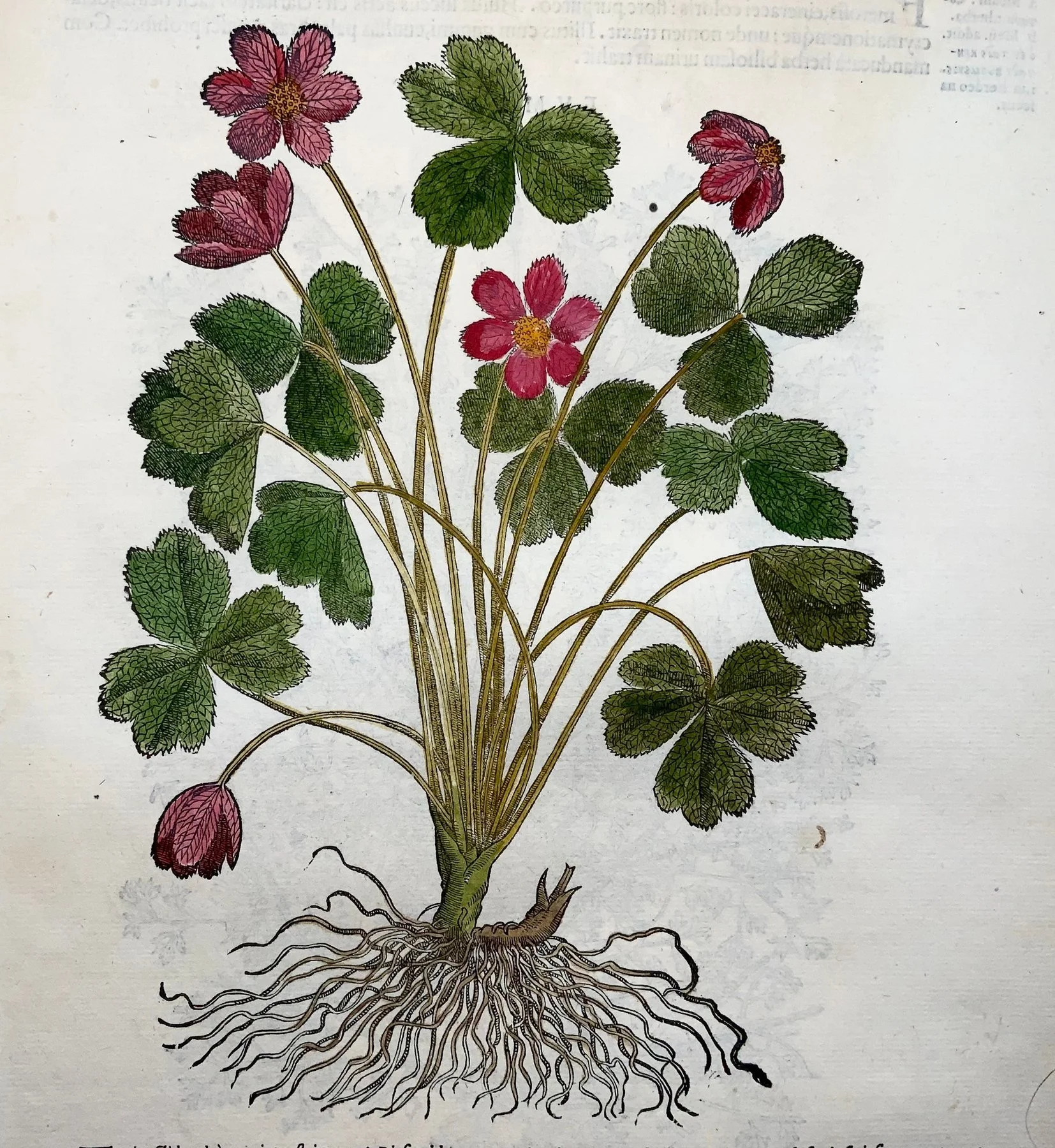
Giorgio Liberale and the Birth of Botanical Illustration as High Art
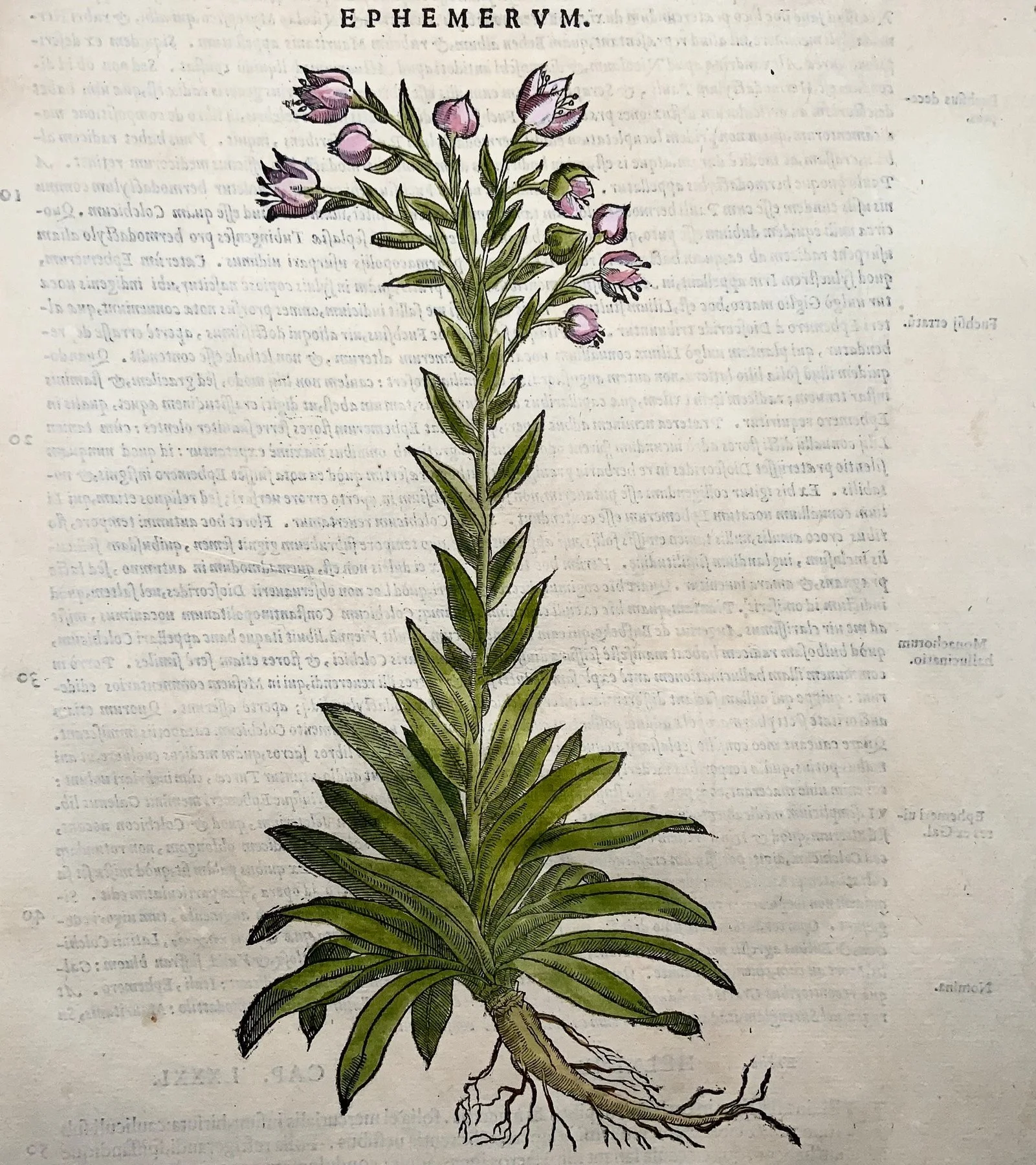
Among the great achievements of Renaissance print culture, the botanical illustrations created by Giorgio Liberale for Pietro Andrea Mattioli’s Herbarz stand apart as some of the most beautiful and influential images ever made of the plant world. Produced in Prague in the mid sixteenth century for the imperial court, these woodcuts transformed botany from a practical medical discipline into a visual art of astonishing refinement.
Today, Liberale’s botanical prints are regarded as masterpieces of Renaissance scientific illustration. Their clarity, elegance, and survival of hand coloring after nearly five centuries make them essential works for collectors of rare books, natural history, and early modern art.
Giorgio Liberale and the Imperial Court of Prague
Giorgio Liberale was born in Udine around 1527 and rose to prominence as an artist working for the imperial court in Prague, one of the most important intellectual centers of Renaissance Europe. Prague under the Habsburgs was a place where science, medicine, art, and humanist scholarship converged, and Liberale was entrusted with one of its most ambitious publishing projects.
That project was the illustrated edition of Pietro Andrea Mattioli’s commentary on Dioscorides, published as the Herbarz by the renowned printer Georg Melantrich between 1562 and 1565. Liberale was responsible for designing hundreds of large botanical images, an undertaking of extraordinary scale and ambition.
These were not decorative embellishments. They were meant to communicate botanical knowledge with accuracy, authority, and visual impact.
The Collaboration with Wolfgang Meyerpeck
Liberale’s designs were engraved as woodcuts by Wolfgang Meyerpeck, one of the most skilled engravers active in Prague during this period. The collaboration between Liberale and Meyerpeck resulted in images of remarkable delicacy. Contemporary and later bibliographers observed that many of these blocks were cut so finely that they wore down quickly, making early impressions especially desirable.
The precision of Meyerpeck’s engraving allowed Liberale’s designs to retain subtlety of line, texture, and structure. Leaves, roots, stems, and flowers are rendered with both scientific clarity and compositional balance. Even today, these images feel calm, ordered, and confident in their presentation of nature.
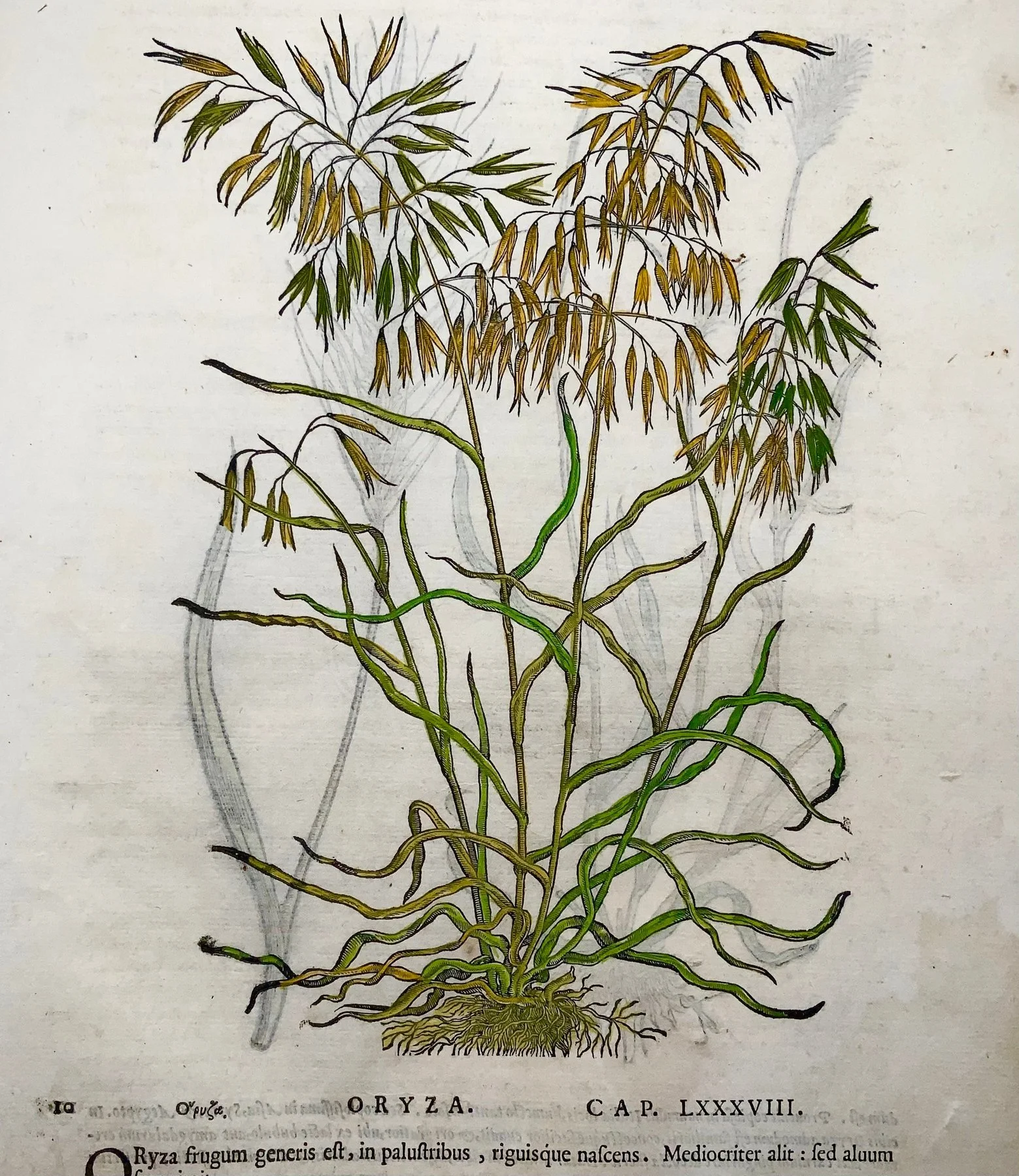
Why the Hand Coloring Still Feels Alive
Many surviving examples of Liberale’s botanical prints were hand colored shortly after printing, likely for physicians, scholars, and elite collectors. The pigments used were mineral and organic, applied carefully to woodcuts that already possessed strong structural clarity.
The result is extraordinary longevity. Greens remain fresh, stems retain warmth, and flowers maintain contrast and presence. Each example is unique, shaped by the hand that colored it centuries ago. This individuality is part of what makes Liberale’s prints so compelling to modern collectors.
Why Liberale’s Prints Matter Today
Giorgio Liberale’s work marks a turning point in the history of botanical illustration. Before these images, plants were often shown schematically or symbolically. Liberale’s designs insist on observation, proportion, and visual coherence. They helped standardize how plants were depicted and understood across Europe.
Collectors value these prints not only for their beauty, but for their historical role in shaping medicine, botany, and scientific communication. Institutions recognize them as foundational documents in the visual history of science. Private collectors prize them for their rarity, scale, and quiet authority.
A Renaissance Legacy Preserved on Paper
To encounter a botanical woodcut designed by Giorgio Liberale is to see the Renaissance belief that knowledge should be both accurate and beautiful. These prints were created at a moment when art and science shared a common language, and when images carried intellectual weight.
That is why Liberale’s work endures. Not as decoration, but as evidence of a world learning how to understand nature through the printed image.