Conrad Gesner and the Birth of Modern Natural History
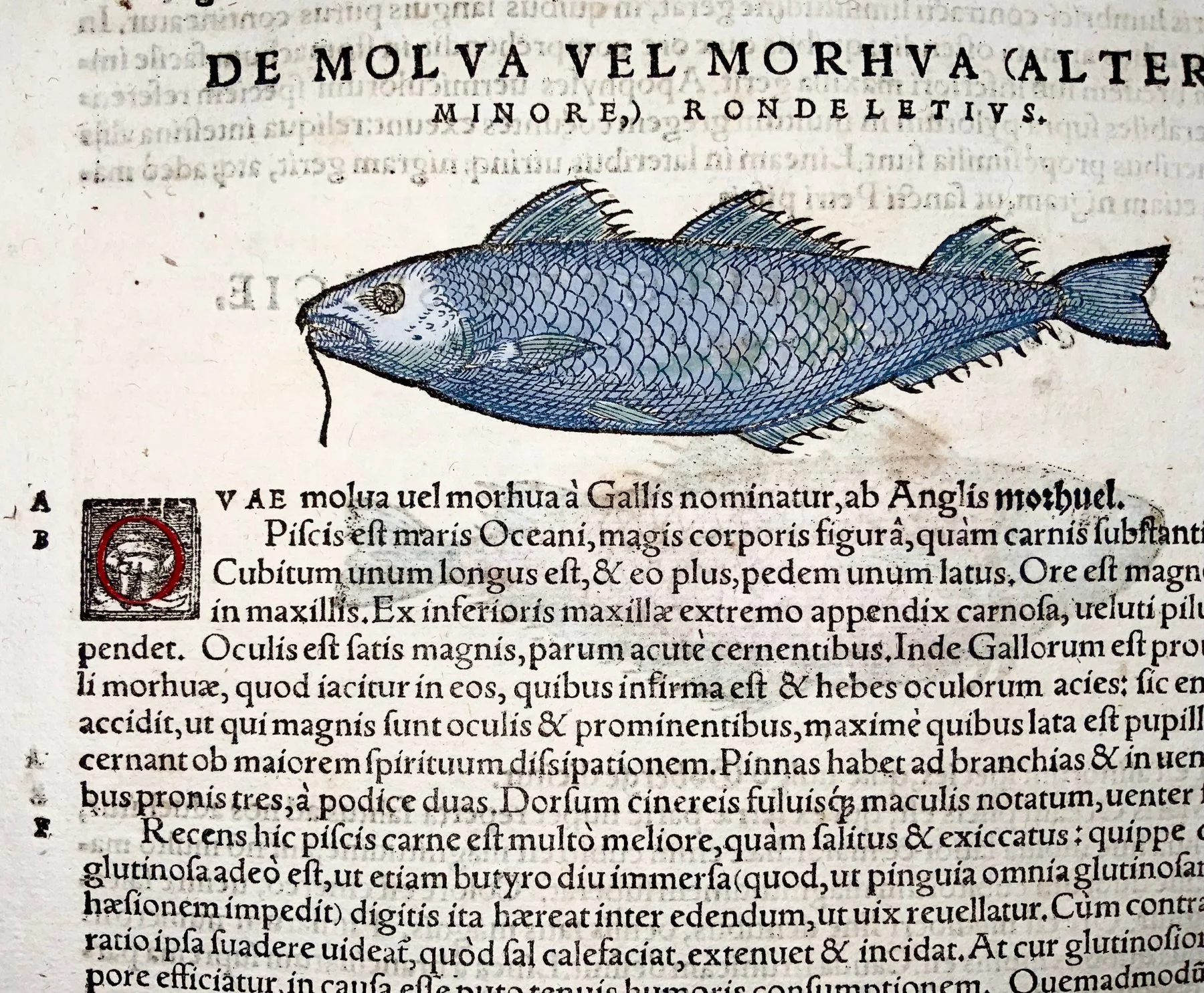
Few figures in the history of science loom as large as Conrad Gesner. Long before modern biology, long before standardized taxonomy, Gesner set out to document the natural world with a rigor and ambition that had never been attempted before. His work laid the foundation for zoology, ornithology, and ichthyology, and his illustrated books remain among the most important scientific publications of the Renaissance.
Today, Gesner’s natural history prints are prized not only for their rarity, but for their role in shaping how Europe first learned to observe, classify, and understand animals as subjects of study rather than myth alone.
Conrad Gesner and the Renaissance Mind
Conrad Gesner was born in Zurich in 1516 and emerged as one of the great polymaths of the sixteenth century. A physician, scholar, linguist, and naturalist, Gesner worked at a time when knowledge was still fragmented across classical texts, folklore, and traveler accounts. His response was revolutionary. He sought to gather everything known about animals into a single, systematic body of work.
That effort resulted in the monumental Historiae Animalium, published between 1551 and 1558, one of the most ambitious natural history projects ever undertaken. Gesner’s books covered mammals, birds, fish, and reptiles, combining textual scholarship with detailed illustrations that allowed readers to see animals as coherent, physical beings.
The Power of Gesner’s Illustrations
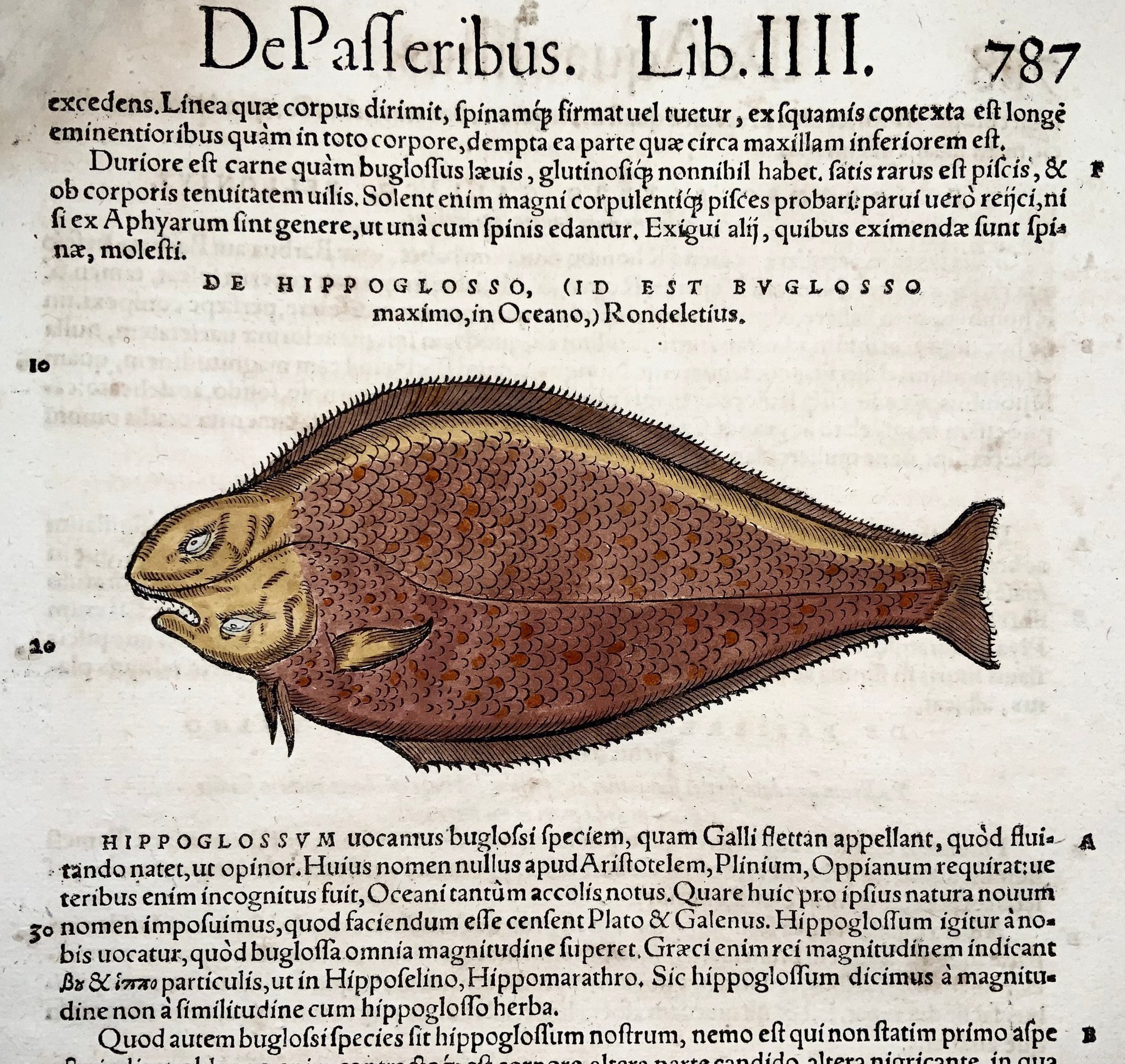
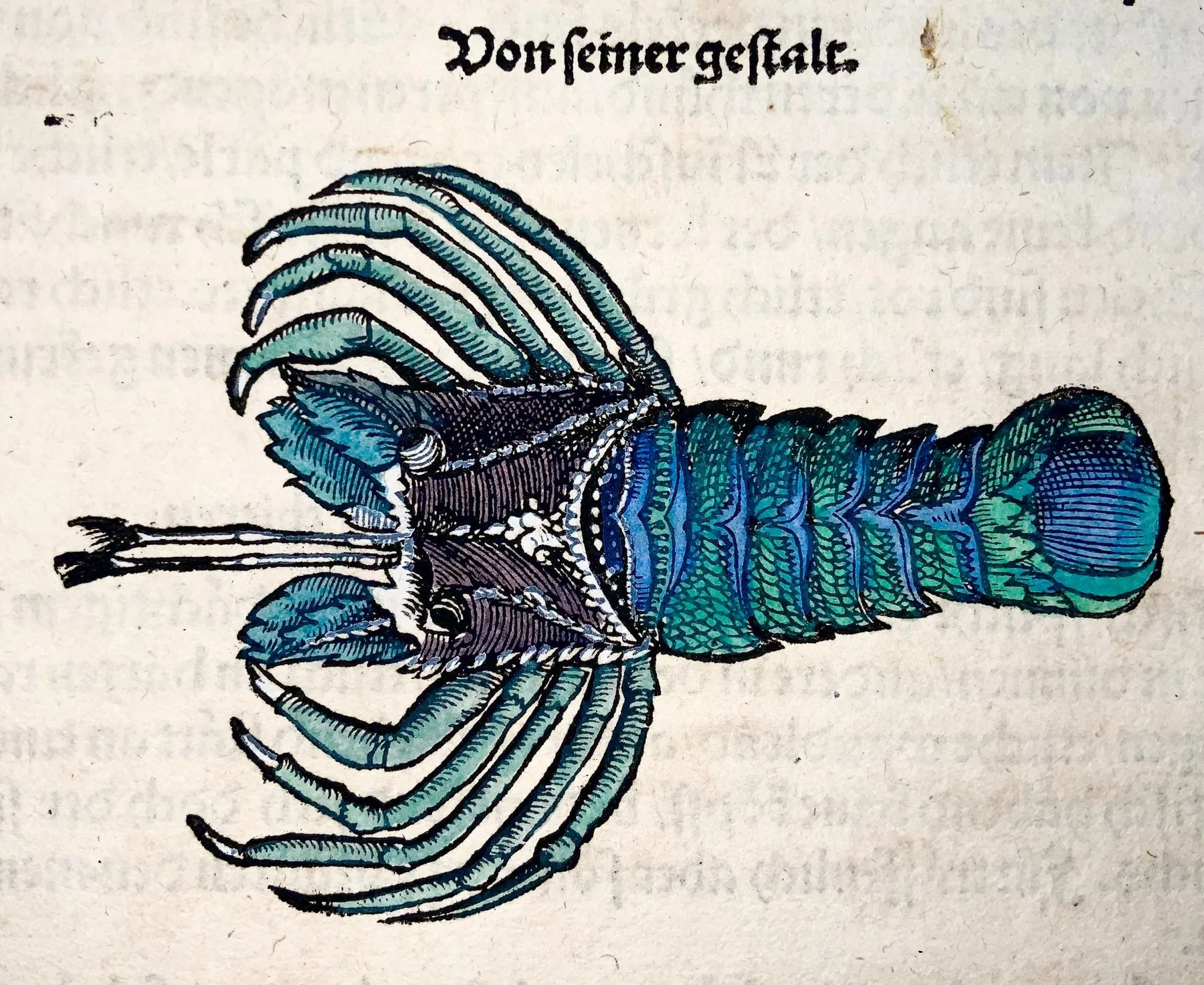
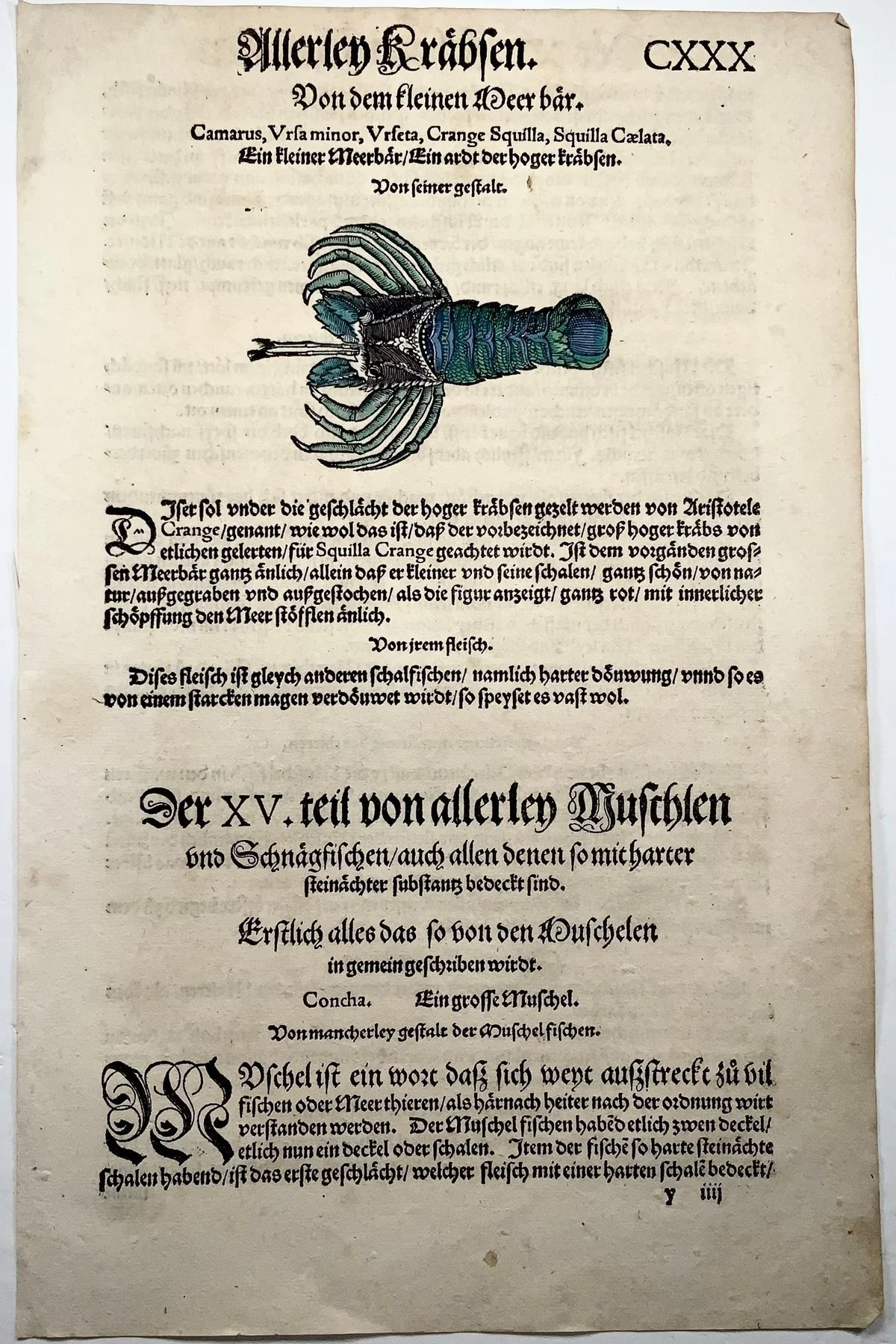
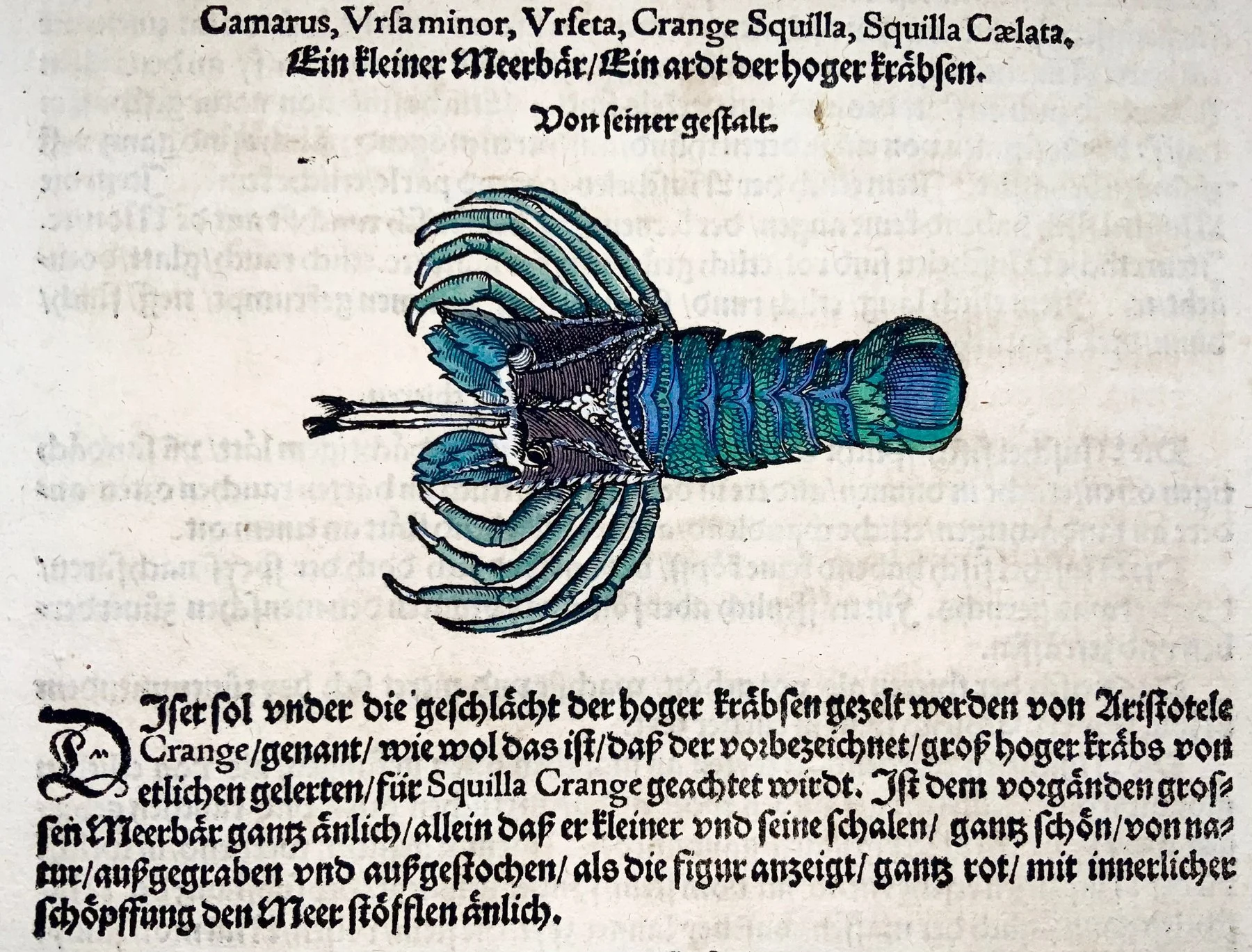
Gesner understood that images were not secondary to science. They were essential to it. His works relied on carefully cut woodcuts that translated observation into form. These images became the visual vocabulary through which animals were recognized and compared across Europe.
Many surviving impressions were later hand colored, either for wealthy patrons or collectors, transforming scientific diagrams into vivid, almost intimate objects. Even centuries later, these prints retain remarkable presence. Fish appear solid and weighted. Birds feel alert and watchful. Reptiles possess texture and movement.
The clarity of Gesner’s imagery explains why his work influenced generations of scientists, including Aldrovandi and later naturalists of the Enlightenment.
Why Gesner’s Prints Still Matter
Gesner’s importance lies not only in what he recorded, but in how he changed the act of recording itself. He introduced comparison, cross referencing, and visual consistency into the study of animals. His books taught readers how to look carefully and how to distinguish one species from another.
For collectors today, Gesner’s prints represent the moment when observation overtook legend. These are among the first images in European history that treat animals as objects of systematic study. Institutions value them as cornerstones of scientific publishing. Private collectors value them for their age, authority, and quiet power.
Enduring Legacy on the Printed Page
Conrad Gesner died in 1565, but his influence only grew. His books were reprinted, expanded, and mined by later scholars for decades. The visual language he helped establish remained dominant well into the seventeenth century.
To hold a Gesner woodcut today is to encounter the beginning of modern natural history. These prints are not decorative curiosities. They are documents of a world learning how to see itself clearly for the first time.
