Ulisse Aldrovandi and Cristoforo Coriolano: The Architects of Early Modern Natural History
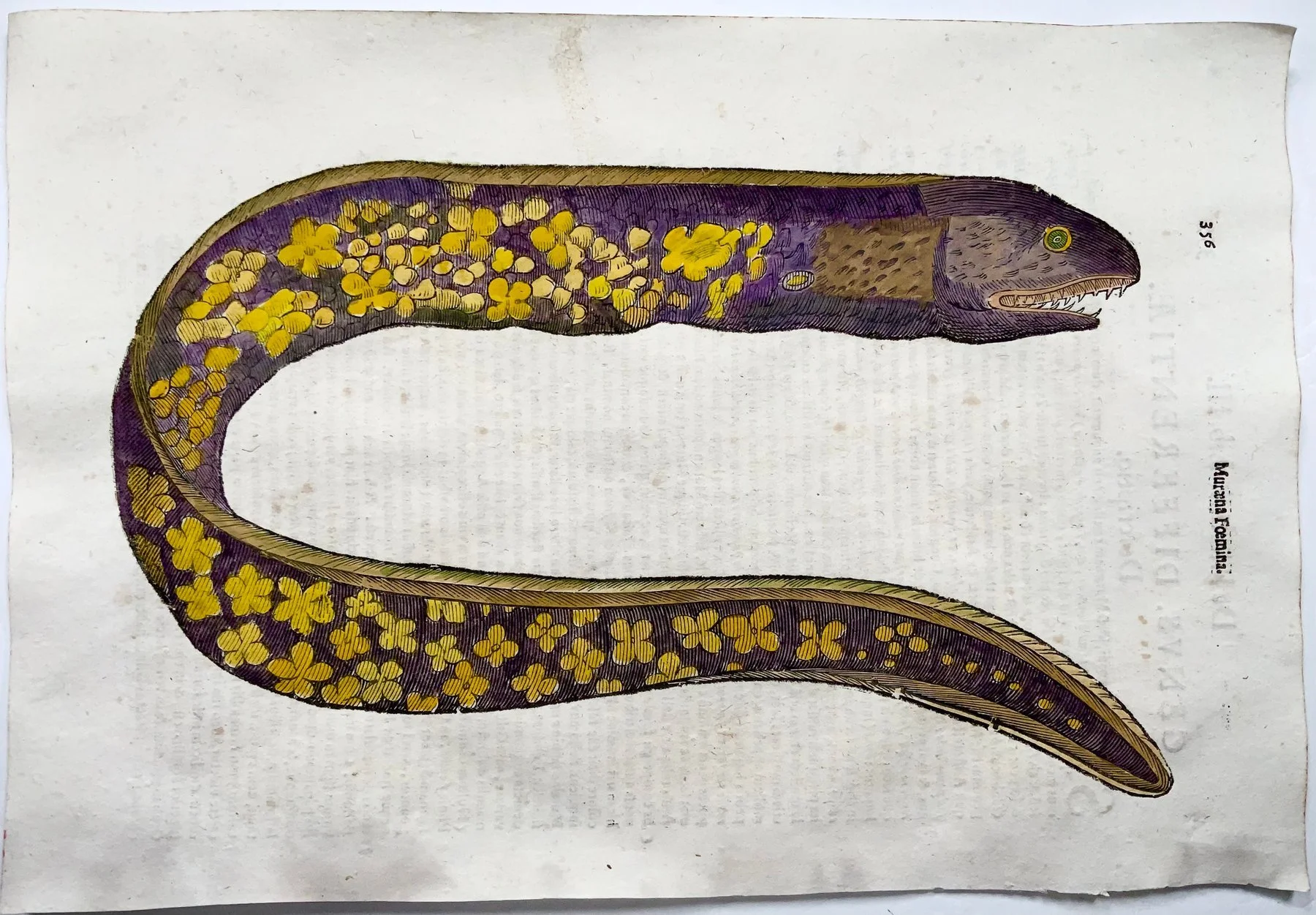
In the history of scientific illustration, few partnerships rival the combined legacy of Ulisse Aldrovandi and Cristoforo Coriolano. Together, they transformed how Europe saw the natural world, producing images of animals and marine life that remain astonishing in their precision, drama, and beauty more than four centuries later. Aldrovandi provided the intellectual vision. Coriolano gave it form. What emerged was nothing less than the visual foundation of modern zoology.
Ulisse Aldrovandi: The Mind Behind the Natural World
Born in Bologna in 1522, Ulisse Aldrovandi was one of the most ambitious naturalists of the Renaissance. At a time when knowledge of animals was scattered across classical texts, folklore, and traveler accounts, Aldrovandi set out to catalog nature systematically. His life’s work became an encyclopedic study of animals, plants, and minerals, grounded in observation, scholarship, and relentless curiosity.
Aldrovandi assembled one of the earliest natural history museums and corresponded widely across Europe. His writings laid the groundwork for zoology long before Linnaean classification. Contemporary scholars referred to him, sometimes with awe and irony, as the supreme authority on nature. His influence extended far beyond Bologna, shaping how generations of Europeans understood the animal world.
Cristoforo Coriolano: The Hand That Made Science Visible
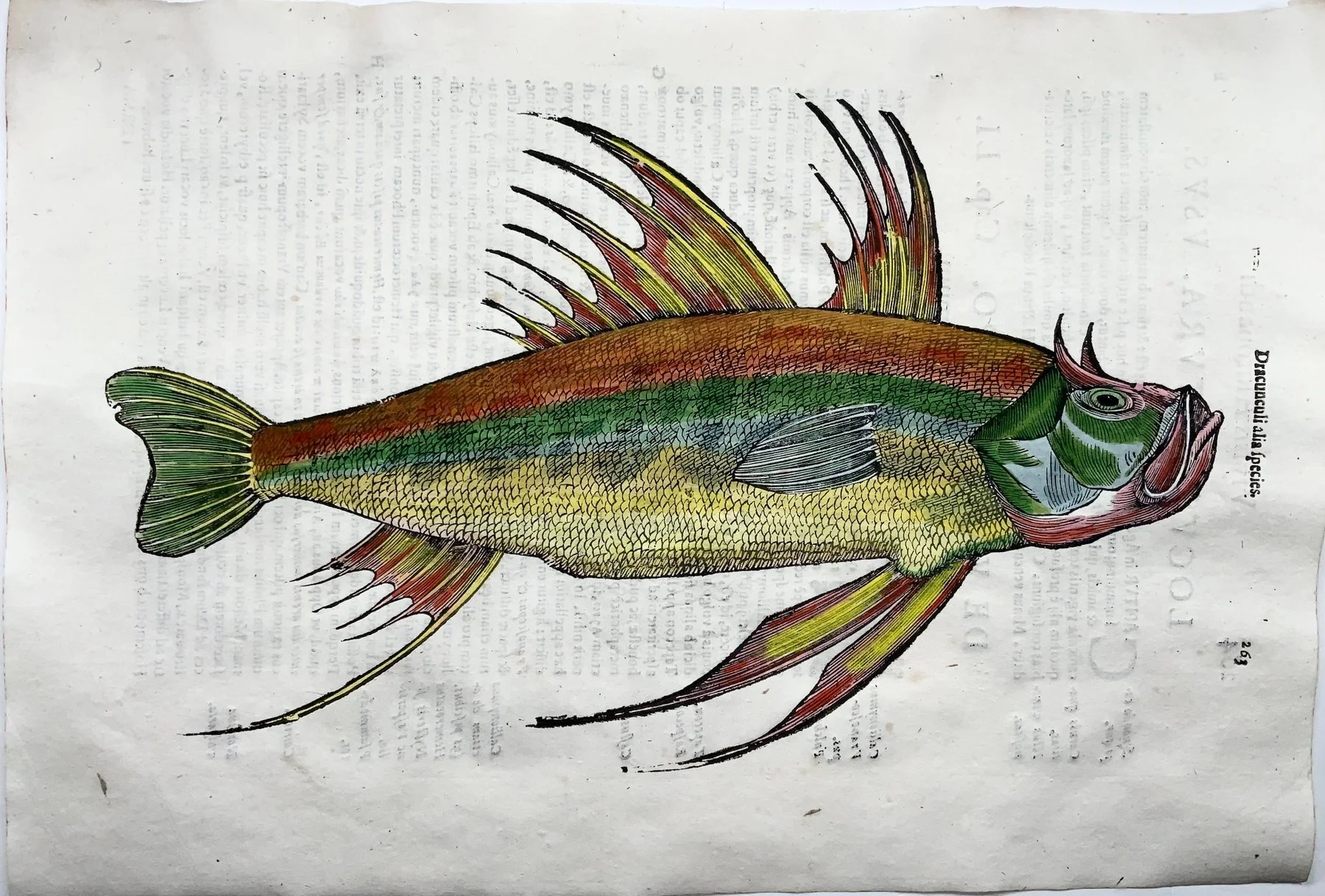
If Aldrovandi was the architect of early zoology, Cristoforo Coriolano was its master builder. Active in the late sixteenth and early seventeenth centuries, Coriolano was among the most gifted woodcut engravers of his era. His work was so finely cut that later bibliographers noted it often resembled copper engraving, an extraordinary achievement for woodcuts.
Coriolano engraved many of the plates for Aldrovandi’s zoological works, including De Piscibus, published posthumously in Bologna in 1638 by Nicolaus Tebaldini. His images of marine life, reptiles, and animals possess a rare combination of anatomical clarity and visual drama. Line by line, Coriolano translated Aldrovandi’s vast knowledge into images that could educate, persuade, and endure.
Art, Science, and the Power of the Woodcut
The collaboration between Aldrovandi and Coriolano represents a moment when art and science were inseparable. These prints were not decorative additions. They were essential instruments of knowledge. Printed as large folio woodcuts and often hand colored shortly after publication, each impression became a unique object shaped by both engraving and colorist.
The survival of color in these prints is one of their most remarkable qualities. Mineral and organic pigments applied centuries ago still convey texture, contrast, and vitality. The animals seem alert, physical, and present, bridging the gap between Renaissance imagination and scientific observation.
Why Their Work Still Matters Today
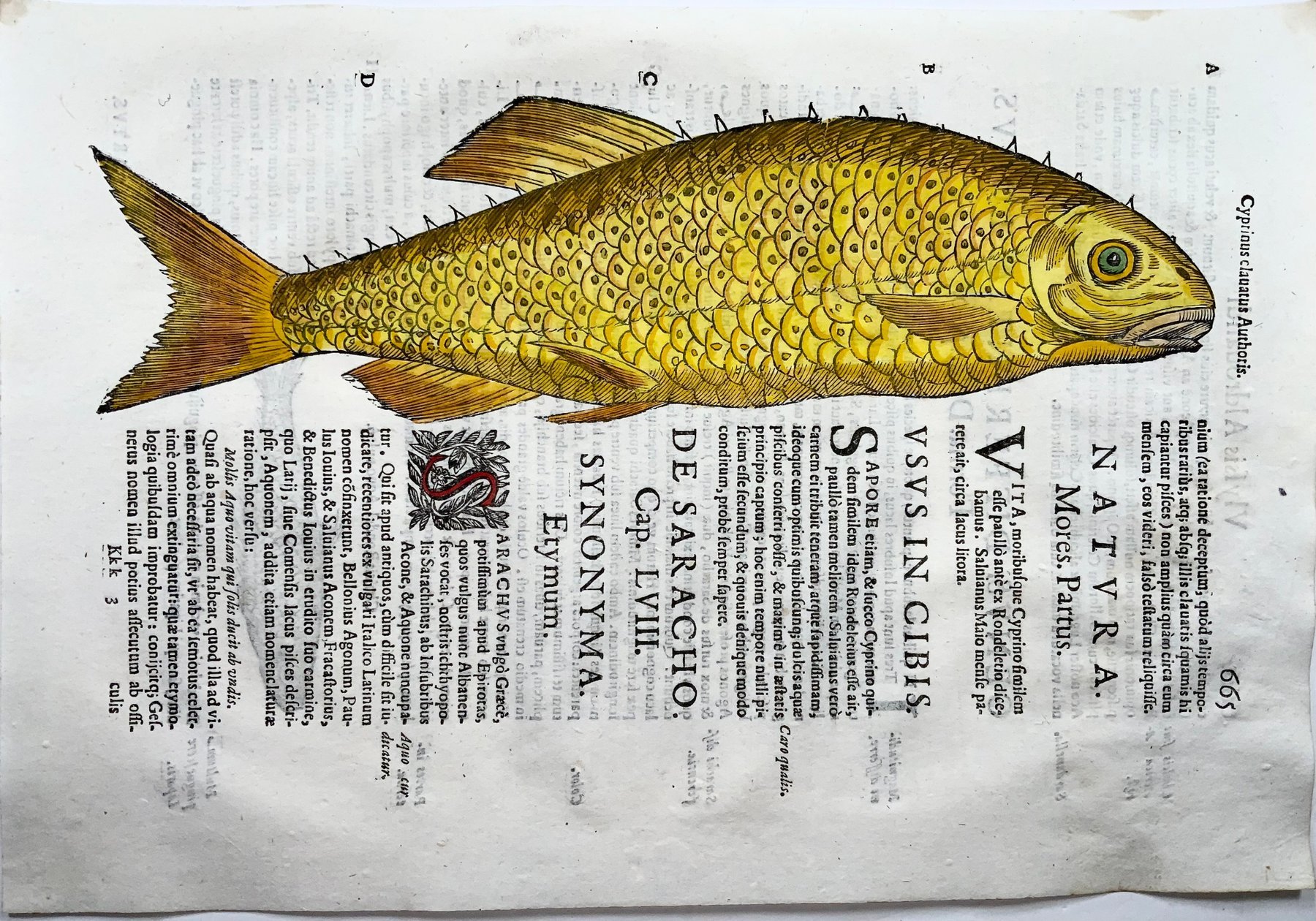
Collectors and institutions prize Aldrovandi and Coriolano not only for rarity, but for significance. These prints mark the moment when Europe began to see animals as subjects of systematic study rather than myth alone. They influenced later naturalists, artists, and publishers, and they remain foundational to the visual history of science.
To encounter an Aldrovandi woodcut engraved by Coriolano today is to witness the birth of zoological illustration. These works are heroic not because they are old, but because they changed how knowledge itself was made visible.
