How to Catalog Rare Books and Prints: The Complete Guide to Tracking and Valuing Your Collection
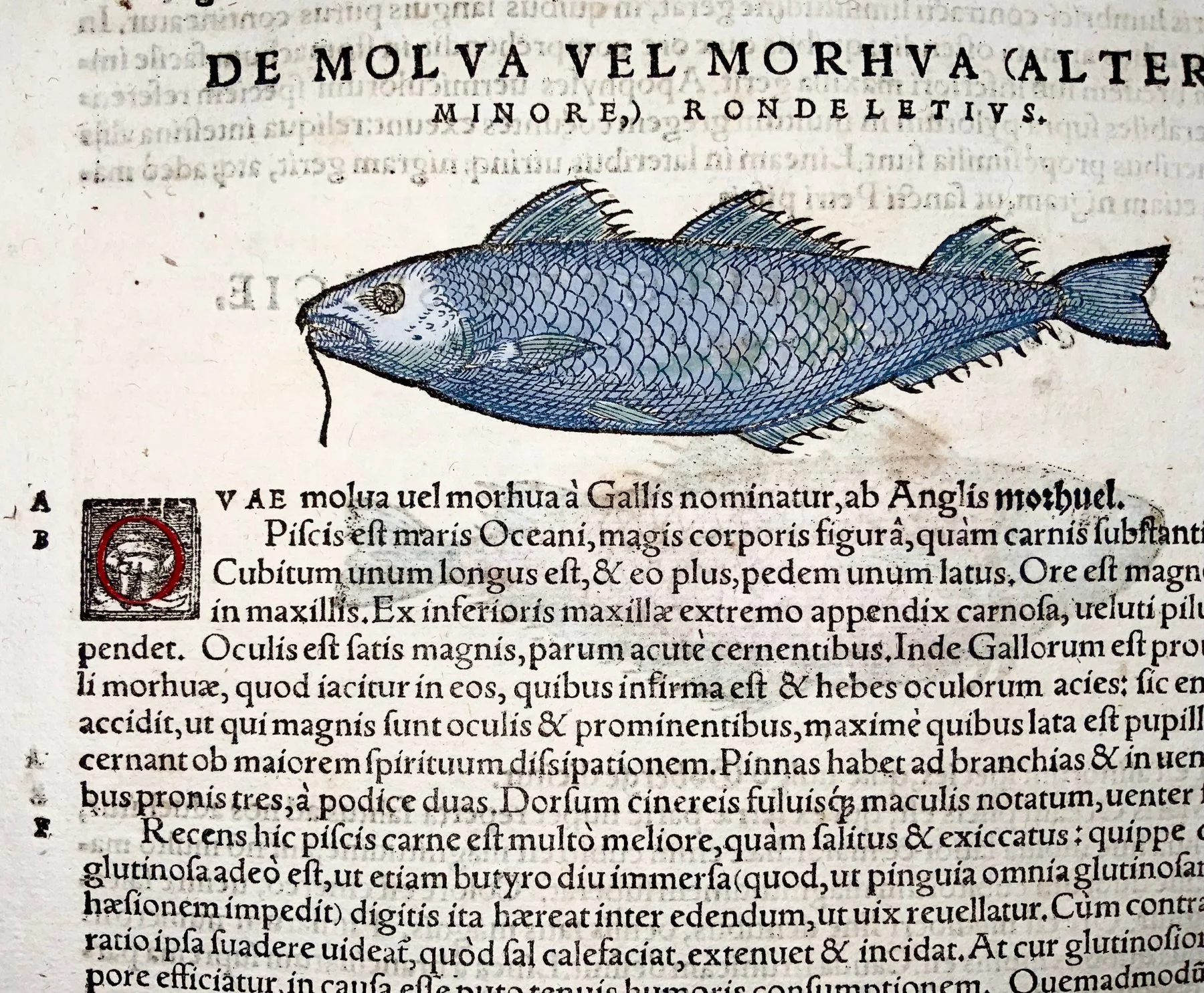
There is a moment every serious collector knows: the collection has grown beyond memory, and the records have not kept pace. You know what you own, roughly. You know what you paid, more or less. But the details — the precise edition, the engraver's name, the condition note you meant to write down, the provenance you half-remember from the auction catalogue — have started to blur.
This bundle was built for that moment. And for every acquisition that comes after it.
The Collector's Cataloging Bundle contains four purpose-built templates for documenting rare books and antiquarian prints at a professional level: a ledger spreadsheet and a full catalog entry document for each category. Together, they give you a complete system — inventory management and individual object documentation, side by side, in formats designed specifically for the demands of antiquarian material.
What's Included
Rare Book Ledger Template (.xlsx) A clean Excel spreadsheet with 17 pre-formatted columns: Accession No., Collection Category, Shelf/Location, Title, Author, Year, Publisher/City, Edition/Volumes, Condition, Bought From, Date Acquired, Price (Original Currency), Total Cost (USD), Estimated Market Value (USD), ROI %, Notes/Key Features, and Image/File Link. Sortable and filterable so your entire library is searchable in seconds.
Rare Book Catalog Entry Template (.docx) A fully structured Word document with 12 pre-labeled sections and example text throughout: Accession No. & Category, Full Title, Author/Editor/Translator, Publication Details, Format & Collation, Binding, Condition, Provenance, References/Bibliography, Description/Commentary, Acquisition Details, and Images/Attachments. This is the document you share with appraisers, insurers, buyers, and estates.
Rare Print Ledger Template (.xlsx) An Excel spreadsheet with 23 pre-formatted columns designed specifically for antiquarian print documentation — fields a standard book ledger cannot accommodate. Covers: Accession No., Collection Category, Shelf/Location, Print Title/Subject, Source Book/Series, Page/Plate No., Date/Year, Engraver, Artist/Draftsman, Publisher/City, Technique, Color, Sheet Size (mm), Image Size (mm), Condition, Bought From, Date Acquired, Price (Original Currency), Total Cost (USD), Estimated Market Value (USD), ROI %, Notes/Key Features, and Image/File Link.
Rare Print Catalog Entry Template (.docx) A structured Word document with 14 pre-labeled sections for complete print documentation: Print Title/Subject, Source Book/Series, Page/Plate Number, Date/Year, Engraver, Artist/Draftsman, Publisher/City, Printing Technique, Color, Sheet Size & Image Size, Condition, Provenance, References/Bibliography, Description/Commentary, Acquisition Details, and Images/Attachments. Formatted to the standard expected by dealers, auction houses, and institutional appraisers.
Who These Templates Are For
These templates are designed for collectors, dealers, and archivists who work with antiquarian material seriously. They are particularly well suited for:
Private collectors building or expanding a rare book or print library
Antiquarian book and print dealers managing active inventory
Estate executors and attorneys needing a formal inventory for appraisal or probate
Librarians and archivists organizing private or institutional holdings
Collectors preparing a collection for sale, donation, or insurance
How to Use Them
The ledger templates function as your master inventory. Assign each item an accession number — a simple format like RB-2025-001 for books or PR-2025-001 for prints works well — enter it as a new row, and fill in the fields at the time of acquisition, when the invoice, auction lot description, and physical object are all in front of you. Use the filter and sort functions to query your collection by any field: find every item by a specific engraver, every book acquired from a particular dealer, or every print valued above a certain threshold.
The catalog entry templates are for building the full record on individual items of significance. Work through each section in order — the structure ensures nothing important is omitted and that every entry reads consistently. The example text in each section tells you precisely what belongs there and how a completed entry should read. When finished, you have a document suitable for sharing with an appraiser, including in a sale catalogue, or archiving alongside the object itself.
The two template types work together: the ledger gives you the view across your entire collection, and the catalog entry gives you the depth on each individual piece.
Format & Delivery
Delivered as a ZIP file containing four templates: two .xlsx and two .docx files
Compatible with Microsoft Excel and Word (2016 and later), Google Sheets and Docs, and LibreOffice
No special software, subscriptions, or plugins required
Immediate download upon purchase
A Note on These Templates
These templates were developed out of years of working with rare books and prints at a professional level — cataloging private collections, advising on acquisitions, and preparing material for sale and estate documentation. They are not generic inventory spreadsheets adapted for collectors. Every field was chosen deliberately, and every section of the catalog entry reflects the information that appraisers, dealers, and institutions actually ask for. They are the templates I use, and the ones I provide to every client I work with.
If your collection requires more than templates — full cataloging services, condition assessment, provenance research, or acquisition consultation — I offer those services as well.
Every serious collector reaches the same moment eventually. It might come when you realize you can't remember exactly which edition you bought at that auction two years ago, or when an insurer asks for a formal inventory and you have nothing to give them, or simply when the shelves fill up enough that the collection starts feeling less like a library and more like a pile. The answer is always the same: you need a catalog. A real, consistent, professionally structured record of everything you own.
This guide walks you through how to do that : for both rare books and rare prints, covering what information to capture, how to assess condition and establish provenance, how to track value over time, and how purpose-built templates can make the whole process faster, more accurate, and genuinely useful. Whether you are a collector building a personal library, a dealer managing inventory, or an executor trying to make sense of an inherited collection, the principles here apply.
Why Rare Books and Prints Demand Different Cataloging Standards
Most people who start collecting either books or prints eventually acquire the other. The two worlds overlap constantly. Antique natural history atlases are collected both for the books themselves and for the plates inside them; a Jesuit missionary volume and its engraved maps attract book collectors and cartographic print collectors alike. But while the objects coexist beautifully on the shelf, they require meaningfully different documentation.
With rare books, the object carries much of its own identity. The title page declares the author, publisher, city, and date. Collation follows established conventions. Reference bibliographies — Sabin, Palau, Medina, ESTC — provide standardized citations that situate any given volume within a scholarly tradition. A trained cataloger working from a book can reconstruct most of its record from the object itself.
Prints are considerably more ambiguous. A single copperplate engraving might have been published loose, later bound into an atlas, reissued a generation later by a different house, and then separated from that second publication sometime in the nineteenth century. The print in your hands may not declare its engraver, its precise date, or even its subject with any confidence. Identifying it requires examining the platemark, the paper, the lettering style, the watermark if present, and then cross-referencing all of that against specialist print references. And once identified, the record needs fields that a book ledger was never designed to hold: printing technique, the distinction between engraver and original draftsman, sheet size versus image size, and a nuanced color status that distinguishes original hand-coloring from later coloring from printed color.
This is why collectors who try to force prints into a book cataloging template end up with incomplete records…and why having purpose-built templates for each category is not a nicety but a necessity.
What Every Rare Book Record Needs
A professional rare book catalog entry answers four questions: What is it, precisely? What physical condition is it in? Where did it come from? And what is it worth?
Bibliographic identification is the foundation. This means the full title as it appears on the title page — including subtitle and imprint — the author, editor, or translator with life dates if known, the publication details (city, publisher, year), the edition and number of volumes, and the format and collation. Collation — the precise account of leaves, plates, and gatherings — is what separates a genuine bibliographic record from a simple book description, and it is what allows comparison with standard references.
Physical description covers binding and condition separately. The binding record should describe the material (vellum, calf, cloth), the style (contemporary full binding, later rebind, boards), the condition of the binding, and any notable features such as a handwritten spine title or armorial bookplate on the boards. Condition notes for the text block should record foxing, browning, water staining, worm damage, missing leaves or plates, repairs, and any manuscript annotations. Be specific: "Light foxing to preliminaries, small wormhole at lower margin of first thirty leaves, else very good and clean" is a useful record. "Good condition" is not.
Provenance has become increasingly central to the rare book market, both for scholarly purposes and for establishing clear title. Record every previous owner you can document: bookplates, armorial stamps, library withdrawal markings, inscriptions with dates and names, auction provenance with house, date, and lot number. A book with a distinguished provenance — a named collection, a historic library, a notable private owner — carries that history as part of its value.
References anchor the book in the scholarly literature. Citations from Sabin, Palau, Medina, Wing, ESTC, or other relevant bibliographies tell any future researcher or buyer exactly how this copy relates to recorded editions and variants.
Acquisition and value fields close the record: date acquired, source, purchase price in original currency, total cost in a standardized currency, current estimated market value, and the ROI percentage that lets you track how the market for a given category has moved over time.
What Every Rare Print Record Needs
The core structure of a print record parallels the book record, but the specific fields are different enough that mixing the two in a single template produces a muddled result for both.
Identification for prints centers on the subject or title as described on the print or in its source publication, the source book or series if the print originates from a publication, the plate or page number, the date, and — critically — both the engraver and the original artist or draftsman if they are different people. On antique prints these are often distinguished by the abbreviations "sculp." (sculpsit, meaning the engraver) and "del." or "inv." (delineavit or invenit, meaning the draftsman or designer). Getting both right matters for identification, attribution, and value.
Technical description distinguishes the record from a basic inventory. The printing technique — copper engraving, etching, aquatint, mezzotint, woodcut, steel engraving, lithograph — affects dating, aesthetics, and collector demand. Color status deserves its own dedicated field: original hand-coloring contemporary with publication is a fundamentally different object from later coloring applied by a previous owner, and that distinction should never be buried in a notes field. Sheet size and image size, measured separately in millimeters, allow precise comparison with catalogue descriptions.
Condition for prints follows its own conventions. Wide margins are a significant positive and should be noted explicitly. Standard issues to record include foxing, toning, centerfolds, trimmed margins, tears with location, repairs, previous mounting or backing, and any inscriptions. "Centerfold as usual, margins ample, light even toning, else fine" is a complete and useful condition note.
Provenance, acquisition, and value fields mirror the book template in structure but may differ in content — print provenance often involves collector's blind stamps and dry stamps that require specialized knowledge to identify, and auction records for prints are tracked through different sale catalogues than books.

Collecting rare books and original prints is one of the most rewarding pursuits a person can undertake. It is also one of the easiest ways to make expensive, avoidable mistakes. I built this advisory service because I wish someone had been available to guide me when I started — and because the knowledge required to collect well is scattered across languages, institutions, and decades of hard-won experience that most people simply do not have access to.
My name is Sergio Barraza Ingström. I grew up in Tucson, studied at boarding school in New England, completed my undergraduate degree in Comparative Literature at Columbia University, and went on to an MPhil at Cambridge. Over the course of my education and collecting life, I have developed working fluency in English, Spanish, and French, and reading ability in Latin, Italian, Portuguese, and German, with ongoing study of Russian, Greek, and Japanese. This is not incidental. The books and prints I work with were written, printed, and catalogued in these languages. Being able to read a 16th-century Latin colophon, navigate a French auction catalog, or parse an Italian bibliographic description is not a luxury in this field — it is the difference between knowing what you have and guessing.
My personal collection reflects the areas I know most deeply: Arizona and the US Southwest, the Spanish colonial world, early modern cartography, and the French intervention in Mexico and its consequences for Sonora — including the Battle of Guaymas. I hold eight versions of the Father Kino map of Southern Arizona, the earliest printed in 1705 while Kino was still alive, through 1789. I have original letters from the Emperor and Empress of Mexico from the French-imposed period during the American Civil War, and books by the French archaeologists who first began excavating the major Mayan sites. These are not inventory. They are the foundation of a lifetime of study.
Clients come to me when they want to collect seriously — not decoratively. I work with people who are building collections with intellectual coherence and historical depth, and who want to avoid paying too much, buying wrong, or missing what matters.
What I can help you with:
Bibliographic identification and edition priority — understanding exactly what an object is, where it sits in the history of its publication, and why that matters to its value and significance. Auction strategy and pre-sale evaluation — knowing which lots deserve attention, what condition issues to look for, and what a fair price looks like before you raise your paddle. Dealer vetting and private sale navigation — the rare book and print world runs on relationships and reputation, and knowing who to trust is half the work. Rare book hunting — I maintain active relationships with antiquarian dealers, auction houses, and private collectors in Europe and the United States, and can source material that never appears in public listings. Collection development — helping you define what you are building, identify the gaps, and make acquisitions that strengthen rather than dilute the whole. Provenance and condition assessment — understanding the physical history of an object and what that means for its integrity and long-term value.
This service is right for you if you are entering the rare book or print world for the first time and want to learn without making costly mistakes, if you are an established collector ready to bring more focus and depth to what you are building, or if you represent a gallery, library, or institution seeking expert guidance on acquisition, identification, or collection strategy.
Advisory is available as a four-session engagement — four weekly one-hour consultations, remote or in person — or as a project-based arrangement for targeted acquisition or collection development. Ongoing mentorship for active collectors is also available. Arrangements can be tailored to your situation.
To inquire, use the contact form or write directly. I respond to every serious inquiry personally.
How the Templates Have Helped Real Collectors
The feedback that comes back most consistently from collectors who have adopted these templates is a version of the same thing: I didn't realize how much I didn't know about my own collection until I tried to fill these in.
One customer — a longtime collector of natural history plates who had been acquiring prints for nearly twenty years — came to me with several flat files full of beautiful material and almost no documentation. When we sat down with the print ledger template and began working through his holdings, it became clear that a significant number of his plates had been attributed to the wrong engraver, that several came from publications he hadn't identified, and that his condition assessments had been inconsistently applied across the collection. Within a few weeks of systematic cataloging, he had not only a complete inventory but a far clearer sense of where the genuine rarities in his collection were — and where he had overpaid.
Another customer, a dealer specializing in Jesuit and early missionary literature, began using the rare book ledger template to manage her inventory after years of keeping records in a combination of handwritten notes and a general-purpose spreadsheet that had grown unwieldy. The structured ledger let her sort by collection category, filter by condition grade, and calculate total cost versus market value for any subset of her stock in seconds. She told me it changed the way she thought about acquisitions — having clean data made it much easier to identify where her inventory was strong and where there were gaps worth filling.
A third customer inherited a mixed collection of antiquarian books and prints from a family member and needed to produce a formal inventory for the estate. The catalog entry templates gave the estate attorney and appraiser exactly the format they needed: consistent, complete, professionally structured records for every item. What could have been a months-long process of reconstruction was completed in a matter of weeks.
Building Your Accession System
Before you catalog your first item, decide on your accession numbering system — and apply it to everything from that point forward. A practical format combines a category prefix, the year, and a sequential number. For books: RB-2025-001, RB-2025-002. For prints: PR-2025-001. For specific subcategories, you might use NHP for natural history plates, MAP for cartographic material, JES for Jesuit imprints, and so on.
The number should be physically associated with the object — written in pencil on the verso of a print in a lower corner, or on an archival enclosure, or on a small label inside the back board of a book. It should never be erased or reassigned. And it should appear in your ledger as the primary key that connects every record to its physical object.
Location tracking belongs in the same ledger. Record shelf designation, flat file drawer, or storage box for every item. When something moves — because you rehoused it, loaned it, framed it, or sent it to auction — update the location field immediately. A catalog that doesn't reflect physical reality is a catalog you can't trust.
Free Templates to Get You Started
To make professional cataloging accessible from your very first acquisition, I've created four purpose-built templates — two for rare books, two for rare prints — modeled on archival and antiquarian trade standards.
The Rare Book Ledger Template and Rare Print Ledger Template are clean Excel spreadsheets with all fields pre-formatted and ready to populate. Open them, start filling in rows, and you have a professional inventory from day one.
The Rare Book Catalog Entry Template and Rare Print Catalog Entry Template are structured Word documents with every section pre-labeled and populated with example text, so you always know exactly what each field is asking for and how a completed entry should read.
Ready to Build a Collection That's Truly Documented?
Templates give you the structure. But building a genuinely professional catalog — appraising a collection for insurance or sale, researching difficult attributions, or acquiring rare material with confidence — takes deeper expertise. That's where I can help.
I offer specialized services for rare book and print collectors, including full collection cataloging and inventory management, condition assessment and provenance research, acquisition consultation and market valuation, and estate and archival organization. Whether you're starting a collection, bringing order to decades of acquisitions, or preparing material for sale or donation, I can help you do it properly.
The difference between a collection and an archive is documentation. Let's build yours.
Collecting rare books and original prints is one of the most rewarding pursuits a person can undertake. It is also one of the easiest ways to make expensive, avoidable mistakes. I built this advisory service because I wish someone had been available to guide me when I started — and because the knowledge required to collect well is scattered across languages, institutions, and decades of hard-won experience that most people simply do not have access to.
My name is Sergio Barraza Ingström. I grew up in Tucson, studied at boarding school in New England, completed my undergraduate degree in Comparative Literature at Columbia University, and went on to an MPhil at Cambridge. Over the course of my education and collecting life, I have developed working fluency in English, Spanish, and French, and reading ability in Latin, Italian, Portuguese, and German, with ongoing study of Russian, Greek, and Japanese. This is not incidental. The books and prints I work with were written, printed, and catalogued in these languages. Being able to read a 16th-century Latin colophon, navigate a French auction catalog, or parse an Italian bibliographic description is not a luxury in this field — it is the difference between knowing what you have and guessing.
My personal collection reflects the areas I know most deeply: Arizona and the US Southwest, the Spanish colonial world, early modern cartography, and the French intervention in Mexico and its consequences for Sonora — including the Battle of Guaymas. I hold eight versions of the Father Kino map of Southern Arizona, the earliest printed in 1705 while Kino was still alive, through 1789. I have original letters from the Emperor and Empress of Mexico from the French-imposed period during the American Civil War, and books by the French archaeologists who first began excavating the major Mayan sites. These are not inventory. They are the foundation of a lifetime of study.
Clients come to me when they want to collect seriously — not decoratively. I work with people who are building collections with intellectual coherence and historical depth, and who want to avoid paying too much, buying wrong, or missing what matters.
What I can help you with:
Bibliographic identification and edition priority — understanding exactly what an object is, where it sits in the history of its publication, and why that matters to its value and significance. Auction strategy and pre-sale evaluation — knowing which lots deserve attention, what condition issues to look for, and what a fair price looks like before you raise your paddle. Dealer vetting and private sale navigation — the rare book and print world runs on relationships and reputation, and knowing who to trust is half the work. Rare book hunting — I maintain active relationships with antiquarian dealers, auction houses, and private collectors in Europe and the United States, and can source material that never appears in public listings. Collection development — helping you define what you are building, identify the gaps, and make acquisitions that strengthen rather than dilute the whole. Provenance and condition assessment — understanding the physical history of an object and what that means for its integrity and long-term value.
This service is right for you if you are entering the rare book or print world for the first time and want to learn without making costly mistakes, if you are an established collector ready to bring more focus and depth to what you are building, or if you represent a gallery, library, or institution seeking expert guidance on acquisition, identification, or collection strategy.
Advisory is available as a four-session engagement — four weekly one-hour consultations, remote or in person — or as a project-based arrangement for targeted acquisition or collection development. Ongoing mentorship for active collectors is also available. Arrangements can be tailored to your situation.
To inquire, use the contact form or write directly. I respond to every serious inquiry personally.
