Why Antique Prints Cost What They Cost
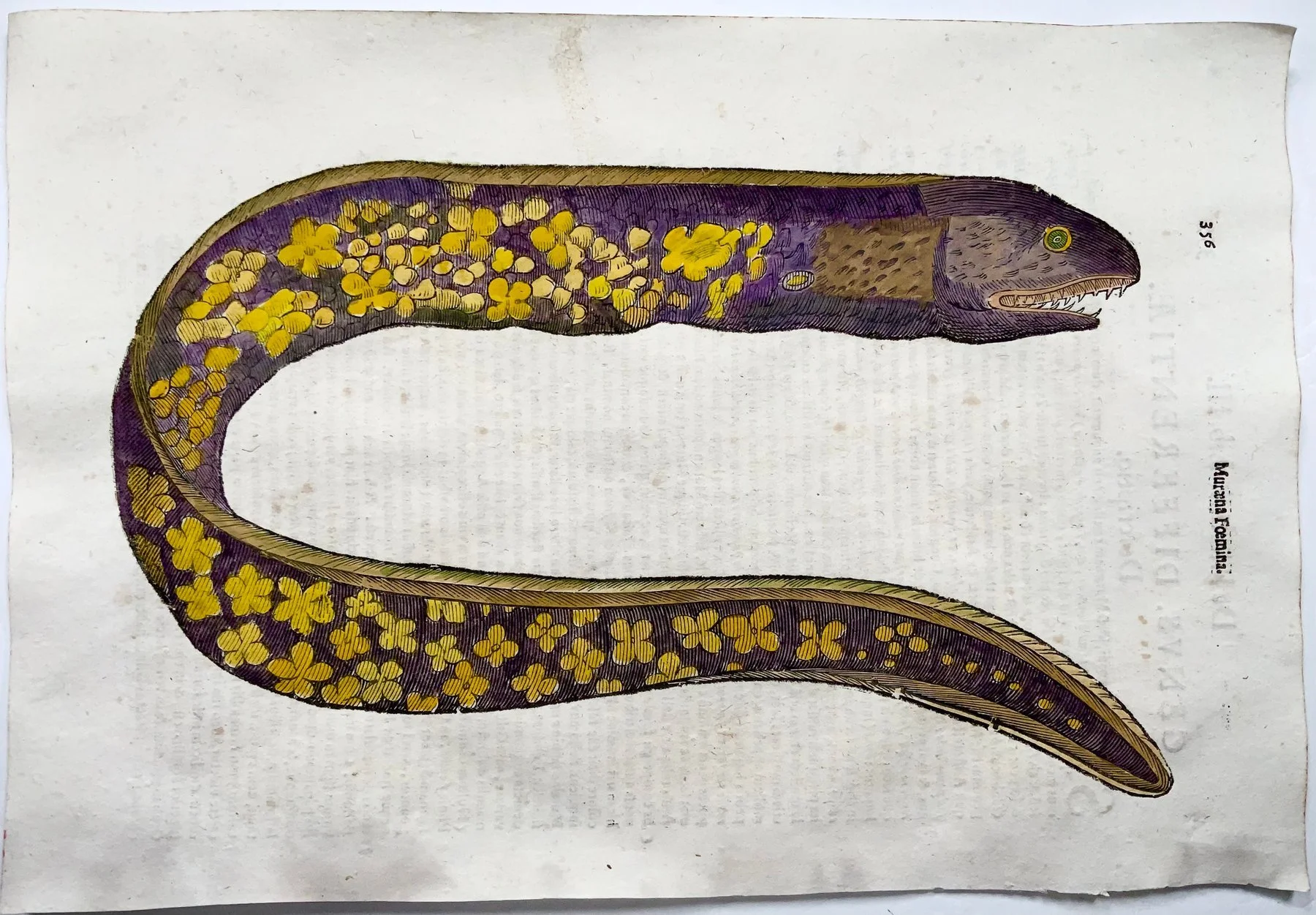
When someone encounters an antique print for the first time, the price is often the moment that stops them. The image may feel familiar, even decorative, yet the cost suggests something far more serious. This reaction is understandable. We live in a world where images are infinite, reproducible, and largely detached from their physical origins. Antique prints belong to a very different economy, one shaped by scarcity, survival, labor, and history.
To understand why antique prints cost what they cost, it helps to step back and look at what these objects actually are.
Before photography, before mass production, and before modern publishing, printed images were the primary way knowledge traveled. Natural history, astronomy, medicine, geography, and exploration all depended on engraved images to communicate information. These prints were not made as decoration. They were working tools, created to be studied, handled, annotated, and passed from one reader to the next.
Every antique print begins with a plate, usually copper, engraved entirely by hand. The engraver translated drawings into lines cut directly into metal, a process that required extraordinary skill and time. Once engraved, the plate was inked and printed on a hand press, one sheet at a time. Each impression required pressure, alignment, and judgment. There was no automation. Every print represents physical labor repeated thousands of times across a lifetime.
Many early prints were later colored by hand. This coloring was not standardized. Pigments varied, techniques varied, and the hand of the colorist is often visible. Two impressions from the same engraved plate can look entirely different depending on when they were printed, how they were colored, and how they were treated over time. This individuality is one of the reasons antique prints resist comparison shopping.
Scarcity plays a major role in pricing, but scarcity is more complex than simple numbers. While a plate may have produced hundreds or even thousands of impressions, only a fraction survive today in collectible condition. Paper is fragile. Prints were folded into books, exposed to light, trimmed, stained, repaired, or discarded. Wars, fires, floods, and neglect have taken their toll. What remains is not the original print run, but a small surviving population filtered by centuries of use.
Condition matters enormously. Collectors are not simply buying an image, but the physical state of the paper, the strength of the impression, the clarity of the lines, and the presence or absence of restoration. A strong early impression with wide margins and original hand coloring may command several times the price of a later, weaker impression from the same plate. These differences are not always obvious to new collectors, but they are immediately visible to experienced dealers and institutions.
Historical context also shapes value. Prints associated with major figures in science, exploration, or art carry weight beyond their visual appeal. A natural history engraving by a figure like Merian or Gesner is not just an image of an animal. It represents a moment when the natural world was being observed systematically for the first time. These prints document the birth of scientific thinking, taxonomy, and visual knowledge.
Provenance further affects cost. A print that has passed through known collections, libraries, or institutions carries a documented history that adds both scholarly and market value. Provenance is not a marketing flourish. It is a record of survival and stewardship. Establishing it takes time, research, and expertise.
Another factor that surprises many first time buyers is geography. The rare book and print market is not uniform across countries. Prices for the same material can differ significantly between France, Spain, England, Germany, and the United States. Local collecting traditions, institutional demand, and cultural attitudes toward negotiation all influence pricing. A print acquired directly from a European dealer reflects not only the object itself, but the cost of expertise, language, travel, and long standing professional relationships.
This is where the human element enters most clearly. Antique prints are not commodities traded anonymously. They move through networks of dealers, collectors, scholars, and institutions. Trust matters. Reputation matters. Access matters. A dealer who has spent decades building knowledge and sourcing material is not simply selling paper. They are offering judgment, experience, and accountability.
For collectors, the price of an antique print also reflects risk. Dealers must invest capital long before a sale occurs. They acquire material, research it, store it properly, insure it, and often hold it for years before finding the right home. Unlike mass produced goods, there is no guarantee of resale or liquidity. Each acquisition is a calculated decision based on knowledge and instinct.
It is also important to understand what antique prints are not. They are not reproductions, even when the image looks familiar. They are not decorative posters scaled for modern interiors. They are not interchangeable. Each object carries the marks of its making and its survival. When you buy an antique print, you are not buying an image alone. You are buying an artifact.
This is why prices can feel counterintuitive when compared to contemporary art or decorative objects. A modern print can be reissued indefinitely. An antique print cannot. Once a strong impression enters a collection, it is removed from the market, sometimes permanently. Museums rarely deaccession important material. Private collectors often hold onto significant pieces for decades or generations.
For new collectors, it can be tempting to compare antique print prices to furniture, paintings, or modern art editions. This comparison usually leads to confusion. Antique prints occupy a unique space between art, document, and artifact. Their value lies not only in aesthetics, but in history, materiality, and survival.
At Biblio Sonora, every print is evaluated with these factors in mind. Acquisition involves close examination of paper, impression quality, coloring, condition, and historical relevance. Pricing reflects rarity, market context, and the reality of sourcing original material responsibly. There is no shortcut to this process, and no formula that replaces experience.
Understanding why antique prints cost what they cost is ultimately about understanding time. These objects have already lived many lives. They have passed through hands, crossed borders, survived neglect, and arrived intact. Their price reflects not only what they are, but what they have endured.
For collectors willing to slow down and learn, antique prints offer something rare in the modern world. A direct physical connection to the moment when knowledge was first printed, shared, and preserved. That connection is what gives them their lasting value.
