Baroque in the Sonoran Desert: Tucson, San Xavier del Bac, and a Hidden European Legacy
When most people think of Baroque art, they picture Rome or Seville. Gold-soaked altars, dramatic saints, shadows and light locked in motion. Tucson rarely enters that mental map. And yet, just south of Tucson, Baroque art survives in one of the most unexpected places in North America.
San Xavier del Bac: A Baroque Church in the Desert
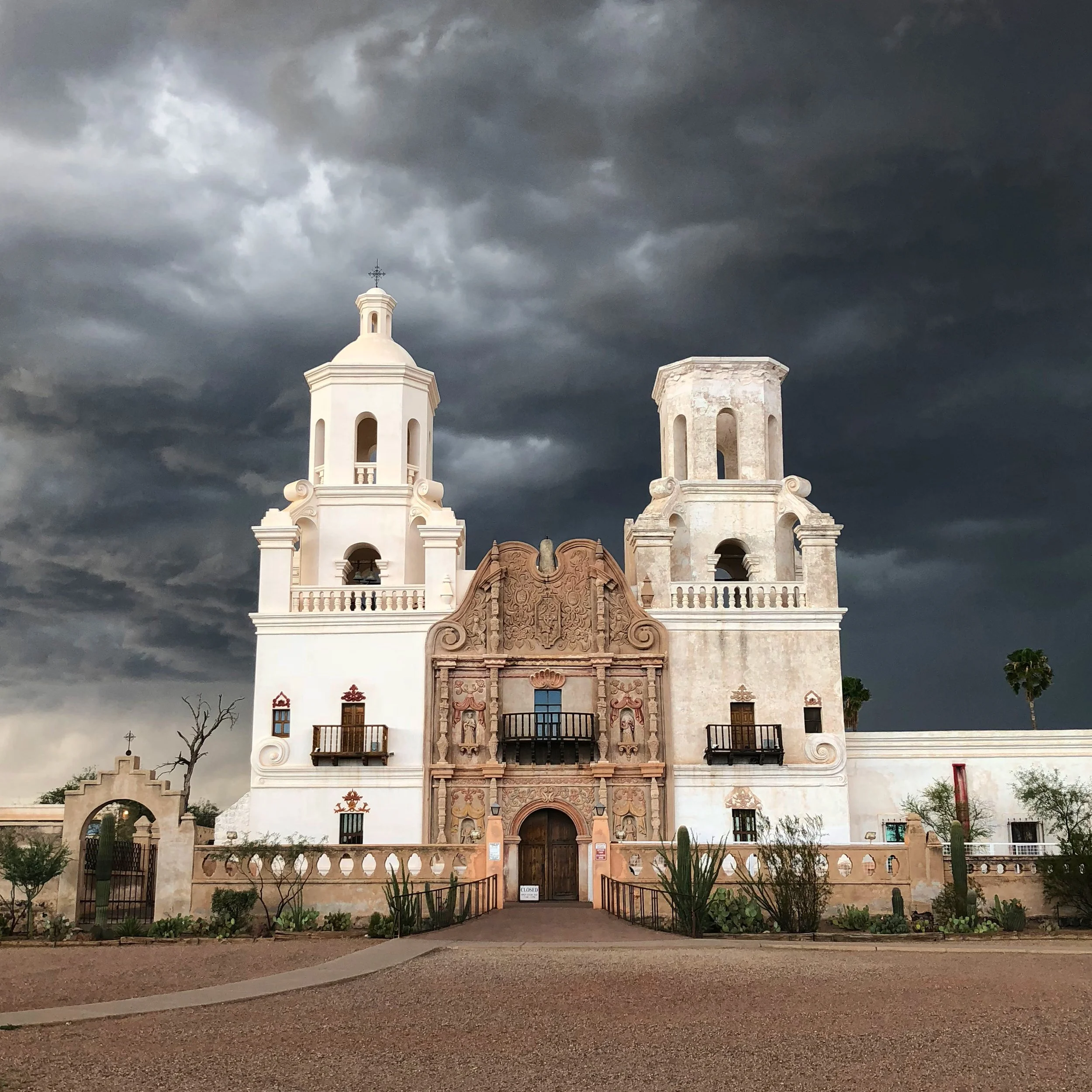
The heart of Tucson’s Baroque heritage is San Xavier del Bac. Rising white against the desert, the mission feels almost unreal the first time you see it. Step inside and the experience becomes unmistakably Baroque.
Carved wooden saints lean forward in devotion. Faces strain with emotion. Gilded altars pull your eyes upward. Color, movement, and drama fill the space, not quietly, but deliberately. This was art meant to be felt as much as seen.
What makes San Xavier so powerful is the fusion. European Baroque ideas arrived here and were reinterpreted by Indigenous artisans using local materials, desert light, and regional traditions. The result is not a copy of Europe, but something new and rooted in place.

Sculpture as Storytelling
In the Baroque world, sculpture was not decoration. It was language. Many people could not read, so art had to speak clearly and emotionally. Saints gesture. Bodies twist. Drapery flows. Everything is designed to guide the viewer toward belief, awe, and understanding.
At San Xavier del Bac, this visual storytelling is still intact. The sculptures remain expressive, human, and immediate. You do not observe them from a distance. You meet them.
The Old Barrio and Spanish Mission Style
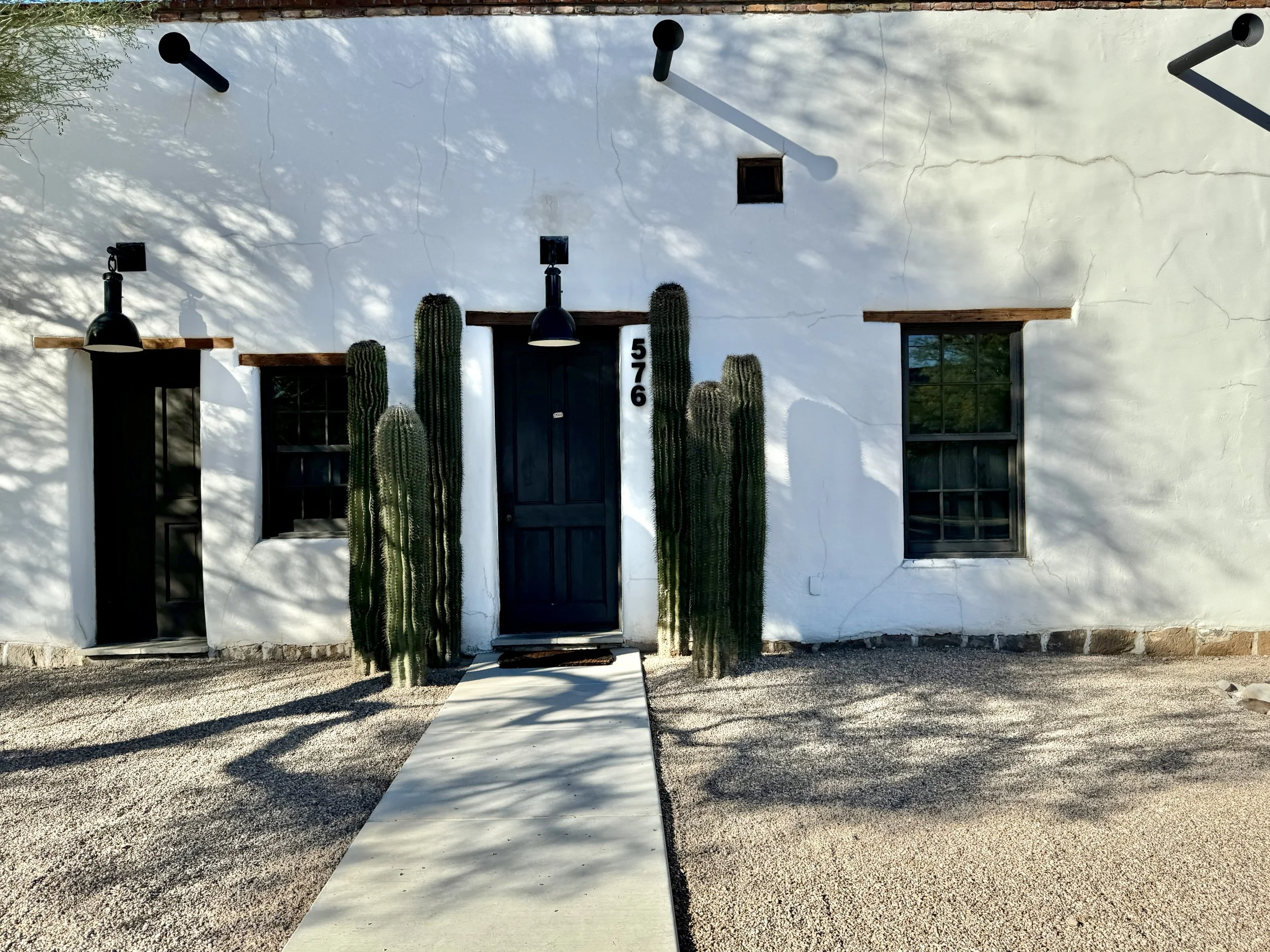
Baroque influence does not stop at the church door. Tucson’s historic barrios, especially the Old Barrio, echo Spanish mission architecture adapted to the desert. Thick adobe walls, hand-carved wood, enclosed courtyards, and deep shadows shaped by sunlight all reflect a Baroque sensibility stripped of excess but rich in presence.
This is desert Baroque. Earthy, practical, and intimate, yet still grounded in the same ideas of space, emotion, and permanence that shaped churches across Europe and New Spain.
Father Kino and the Power of the Printed Image
The spread of Baroque art and thought in the Southwest is inseparable from Father Kino. Kino was not only a missionary but a scholar and cartographer. His world was shaped by books, engravings, maps, and devotional prints carried north from Europe.
Before photography, before mass reproduction, prints were how Baroque art traveled. Engravings and woodcuts carried architecture, saints, scientific ideas, and religious imagery across oceans and deserts. These were the visual tools that helped shape places like San Xavier del Bac.
Owning a Piece of the Baroque
The Baroque in Tucson is not a relic sealed behind glass. It is still part of the landscape, still visible in sculpture, architecture, and printed images.
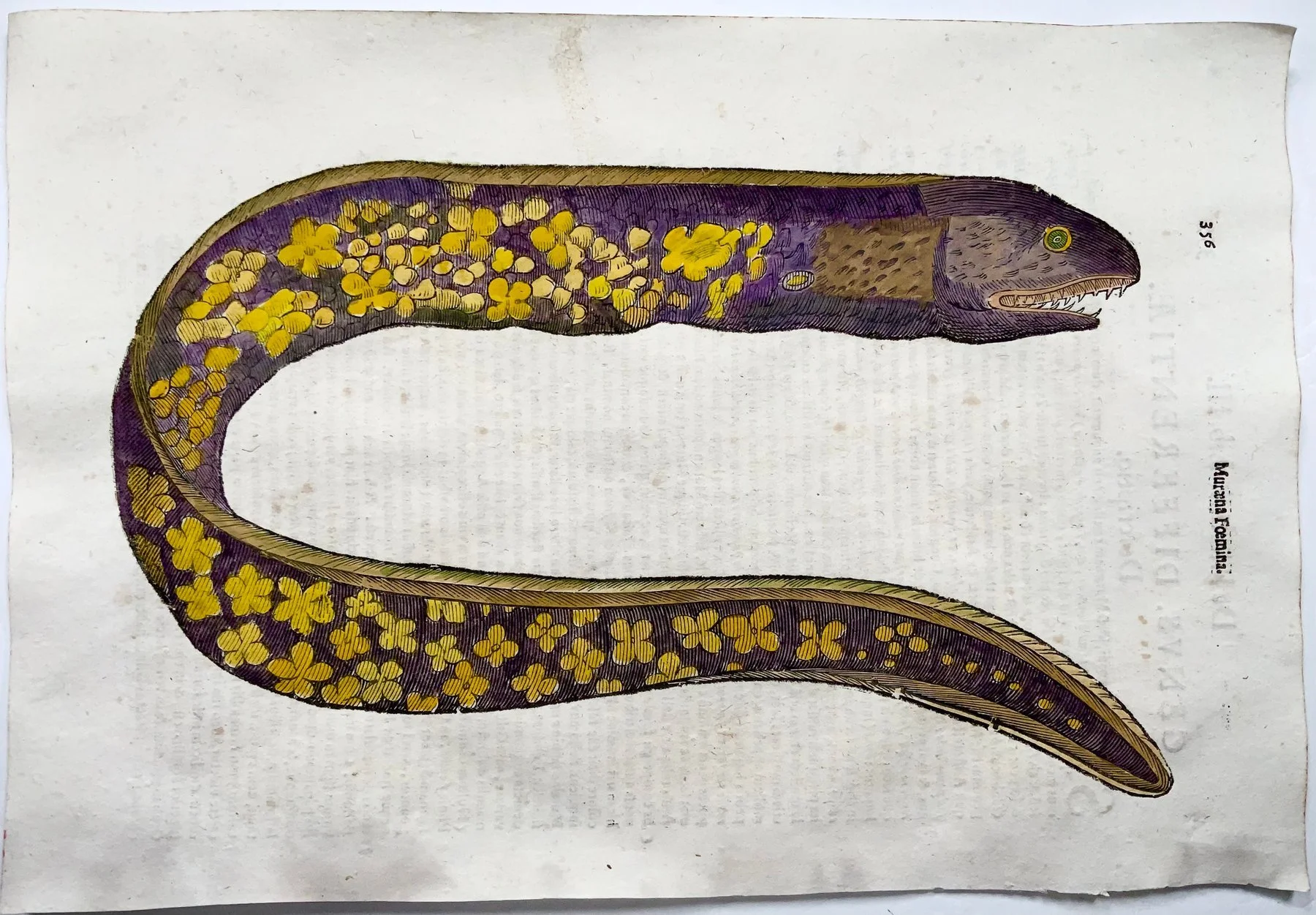
At bibliosonora.com, you can own authentic European Renaissance and Baroque prints. These are original engravings and woodcuts made by hand centuries ago, the same kinds of objects that once carried Baroque art and knowledge into the Sonoran Desert.
To own a Baroque print is to hold history in your hands. Not an imitation. Not a reproduction. A surviving witness to the same visual culture that shaped San Xavier del Bac and Tucson itself.
The Baroque never left the desert. It simply learned how to live here.